Casabrews espresso machines have been popping up everywhere over the last couple of years, mainly because they’re doing something very clever: making low-cost espresso machines that look suspiciously like other popular machines… but with a few extra “spec-sheet sprinkles” thrown in for good measure.
I didn't pay much attention to Casabrews machines at first, but so many people were asking me about them in comments in videos and blog posts, along the lines of “Kev, how does this espresso machine compare to the Casabrews?” “Kev, what do you think of the new Casabrews?” “Is it too good to be true?”… I decided to stop doing my best Ostrich impression and actually review the things.
Quick hello, if this is your first time here. I’m Kev (full name: Coffee Kev). I run CoffeeBlog.co.uk, the Coffee Kev YouTube channel, and CoffeeKev.com for my coffee-loving cousins in the U.S. I’m also the Founder & Director of Coffee at Cworks.co.uk, where we sell unapologetically affordable freshly roasted coffee.
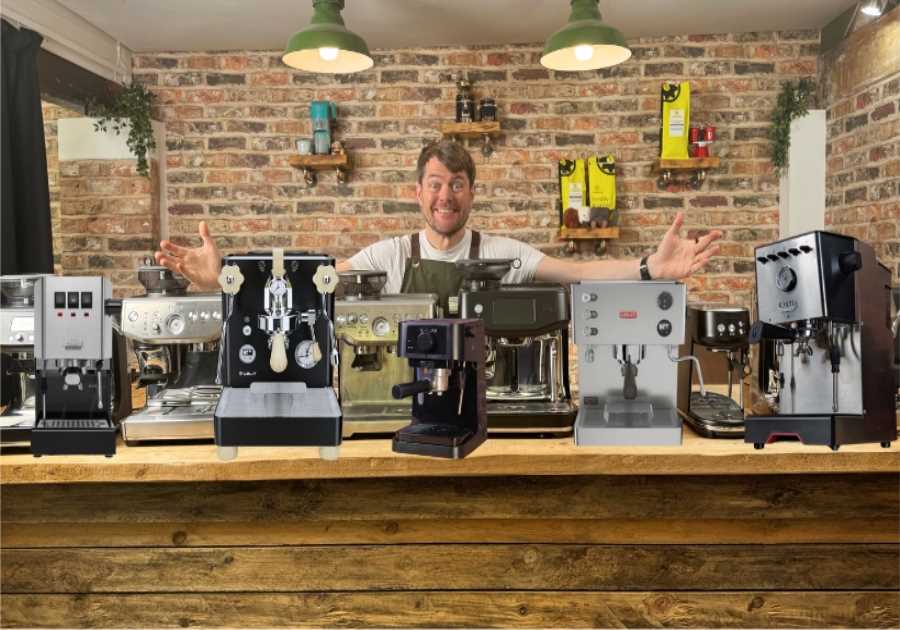
In this article, you’ll find my full review videos from the Coffee Kev YouTube channel, plus photos of the Casabrews machines in use and the machines they’re often compared to. That’s deliberate. I only review machines I’ve actually spent time with, pulled shots on, steamed milk on, and lived with long enough to form an honest opinion.
If something’s rubbish, I’ll tell you. And if it’s genuinely good, I’ll let you know.
When I got hold of the two machines I’m covering here, the Casabrews Ultra and the Casabrews CM5418, my first thought was: “Here we go… another pair of Sage & De’Longhi knock-offs.” Amazon, Temu, AliExpress… they’re absolutely full of lookalike espresso machines these days.
So, are Casabrews just another “looks-like-a-thing” brand… or are they actually building machines that perform like proper alternatives?
At the very least, the Casabrews Ultra is clearly inspired by Sage (think Bambino/Duo Temp Pro vibes), and the CM5418 is very much De’Longhi Dedica-inspired. In this article, I’ll review both, compare each one to the machine it’s “borrowed inspiration”, and tell you which one I reckon you should put your hard-earned cash on.
Quick Navigation
- Casabrews CM5418 Review (Dedica-inspired)
- Casabrews Ultra Review (Sage-inspired)
- Which Casabrews Machine Should You Buy?
Casabrews CM5418 Review (De’Longhi Dedica-Inspired)
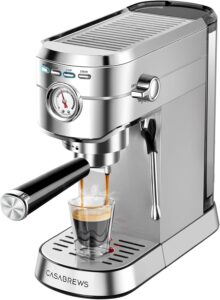
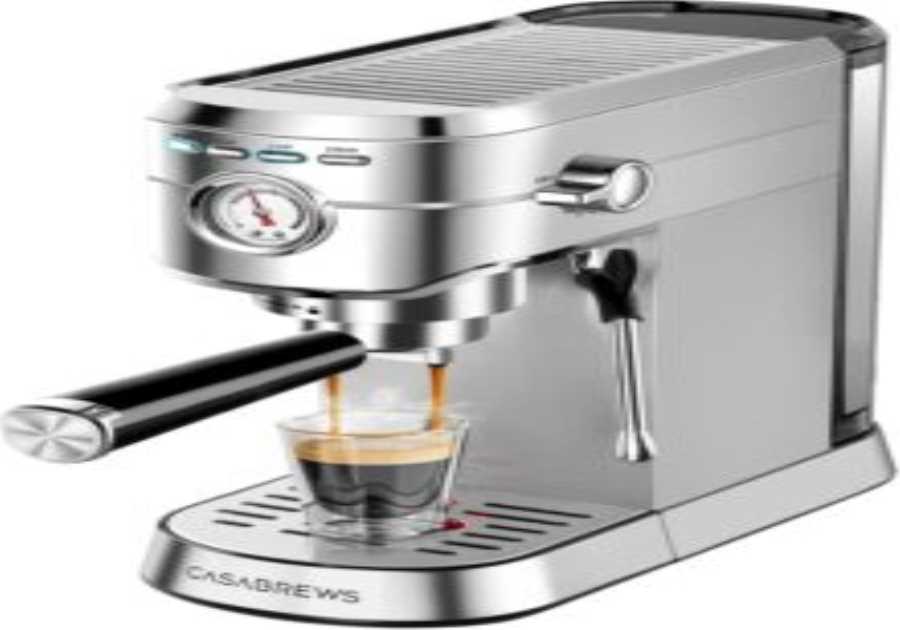
The Casabrews CM5418 is a perfect example of Casabrews’ whole “familiar-but-better-on-paper” approach. It’s got serious De’Longhi Dedica vibes: a slim body, a compact footprint, simple controls, but on paper it looks a bit more “pro”, with a pressure gauge and a single-hole steam wand tip.
So the big question is: Is it actually better than a Dedica… or is it just a Dedica-style machine with a couple of gimmicky bells and whistles?
Let’s find out.
Features
- Dimensions: 15cm wide, 31.2cm deep, 30.4cm tall (5.9 x 12.3 x 12″
- Heater: Thermoblock
- Portafilter: 51mm
- Baskets included: Pressurised (dual-walled) single & double
- Pump: 20-bar vibration pump (we’ll talk about why this doesn’t matter later)
- Water tank: 1.0L / 34 oz
- Shot buttons: Programmable single & double
- Pre-infusion: Automatic
- Pressure gauge: Yes
- Steam wand: “Pro” wand with single-hole tip
First Impressions

The first thing I thought when I saw this was… De’Longhi Dedica Arte.
It’s definitely reminiscent of the Dedica, especially the Dedica Arte (because of the pro steam wand). I wouldn’t go so far as to call it a full-on replica, but I don't think anyone could look at these two machines side by side and not come to the conclusion that the Casabrews machine is inspired by the DeLonghi Dedica.
The difference is, De’Longhi have a bit more finesse. And yes, Dedicas are “budget espresso machines” too, but De’Longhi are very good at building low-cost machines that feel reasonably well-made for the money, and they're incredibly tried & tested, so peace of mind is strong.
Casabrews are essentially saying: “What if we made something that looks like a Dedica, costs less, and includes a pressure gauge?” And that’s not necessarily a bad thing… as long as it performs.
Price
At RRP, this is £149.99 in the UK, but I'll put live pricing below so you can see the current price, including any deals/discounts. They've priced it aggressively, given that the DeLonghi Dedica Arte is £249.99.
The Dedica Arte is often on offer, but so is the Casabrews, so it's definitely an attractive alternative to the De’Longhi Dedica for the budget-conscious. I'll put the live pricing of the Dedica Arte below, too, so you can see what the difference is, including current offers/discounts.
Test Results
Heat-Up Time
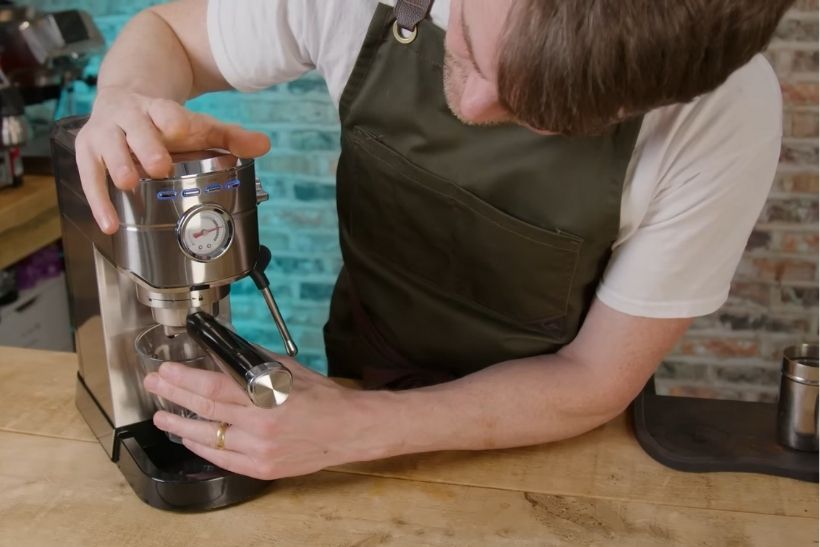
Heat-up time is about 50 seconds, but just keep in mind that this just means the heater itself is up to temp, the rest of the machine including the group and the portafilter, will be stone cold.
If you're using a super dark roast, you may actually find it's an advantage to use the machine straight away after the initial heat-up, and if you're using “normal” supermarket beans, to be honest, you probably won't tell the difference either way.
I'm not putting down mainstream coffee beans by the way (by which I simply mean commercially-roasted beans with no roasted-on date). It's the main benefit of this kind of coffee, you don't really need to put much thought into how you brew it, it won't make much difference to the taste.
If you're using freshly roasted coffee beans, particularly if they're what small-batch roasters refer to as “Medium/dark” (which are usually mid to dark brown and matt, vs commercial dark roast, which is generally very dark brown and glossy) I'd highly recommend running a blank shot first, to heat the internals and the portafilter properly.
If you don’t, the cold metal bits act like a heat sink, and your first “real” shot becomes the warm-up shot, which can make the first and second coffees inconsistent.
Quick Tip: While you're doing this, leave your cup on the drip tray to collect the water; you'll save drip tray space, and heat up your cup, so that also doesn't act as a heat sink.
Steam Performance
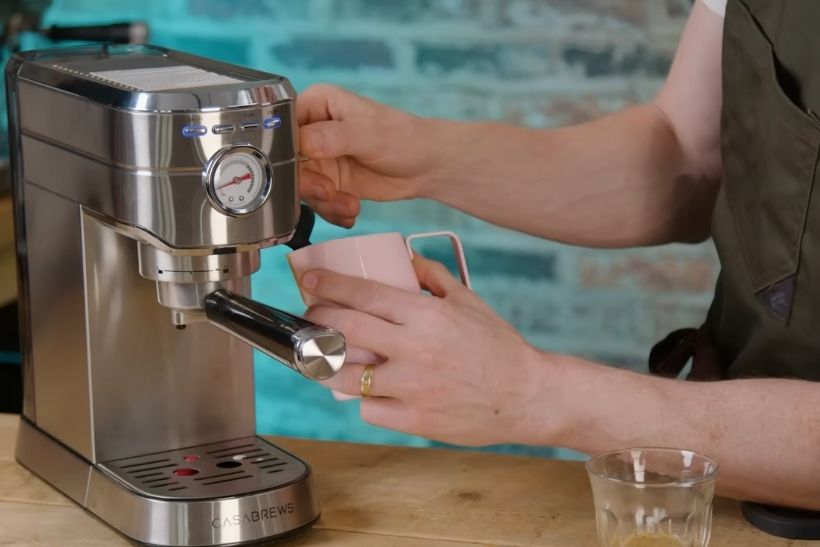
- Steam ready time: ~8-9 seconds
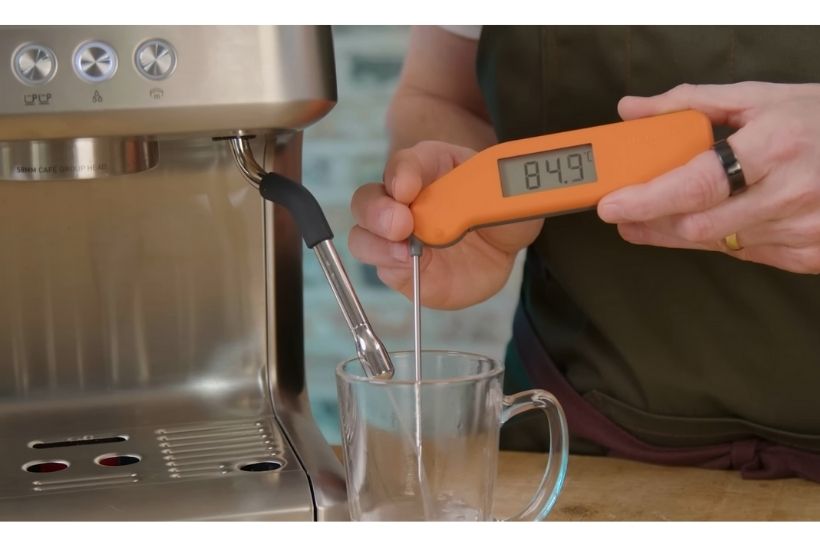
- Steaming speed: 170 ml milk to 60°C in just under a minute (including heat-up)
That’s genuinely good for this price, and actually quicker than the Casabrews Ultra.
Recovery Time (After Steaming)
Shot-ready time after steaming is about 15 seconds if you leave the steam valve open and turn off the steam properly.
The heater has to heat up quite a lot to get to steam temperature, so the recovery time is how long it takes to cool back down to espresso temperature again. It'll always take longer if you just leave it to cool down, but if you turn the steam off and open the steam valve, it'll cool down much faster. Just don't do what I often do with various machines, forget to actually turn the steam off & wonder why it won't cool down…
Temperatures
- Espresso at spouts: ~80°C / 180°F
- Hot water temp: high 80s °C at first
This espresso temperature is about right, by the way. I often hear from people who're concerned because they heard espresso temp should be 93-94 °C, but their espresso temp is much lower. The espresso temp is the temp of the water entering the basket; the espresso will always be much cooler.
Another common mistake is measuring the temperature of water exiting the group. On thermoblock machines, this will always be much cooler, as cool as around 60 °C.
This is just because, without the backpressure generated from the dual-walled basket, or from a standard basket with ground coffee in at a fine enough grind size, water passes through the heater faster than usual.
This is one of the reasons I'd always do a pre-heat flush with a dual-walled basket in the portafilter, and the portafilter locked in (what I call a turbo-flush), as it means you're pre-heating at brew temperature.
Hot water power: 200ml in ~ 70 seconds.
The temperature of the hot water leaving the steam tip starts out at close to 90 °C (in my testing, at least), and the final temperature of the 200ml of hot water in the cup was in the high 70s. 200ml is roughly the maximum volume of hot water it will deliver in one go, by the way.
Noise
It’s about 50 dB from 1 metre when pulling shots, which is about standard for espresso machines with vibration pumps.
Being a vibe pump espresso machine, it does vibrate quite a bit, causing the very common “cup-dance”; you'll need to keep an eye on your cup to make sure it doesn't moonwalk its way off the drip tray.
What Does The Espresso Taste Like?
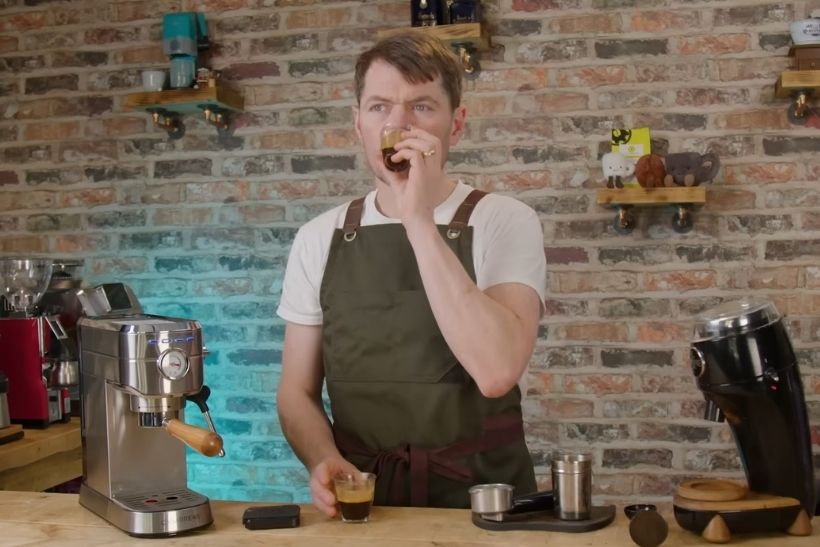
As I always say, the taste depends mainly on three things:
- Your coffee beans
- Your grinder
- Your home barista skills
If you’re using pre-ground coffee (pressurised baskets)
With supermarket pre-ground, you’ll probably find it more intense and thicker-bodied than with pods, but you shouldn't really expect the taste to be any different. Switching from pod coffee to using an espresso machine can result in better-tasting espresso, in addition to it being more intense and bigger in body, but only if you upgrade your beans.
Supermarket beans (I'm talking about commercially roasted beans without a roasted-on date) will taste very similar, regardless of whether they come pre-ground in pods, or as wholebean.
If you want a significant upgrade (still using pressurised baskets)
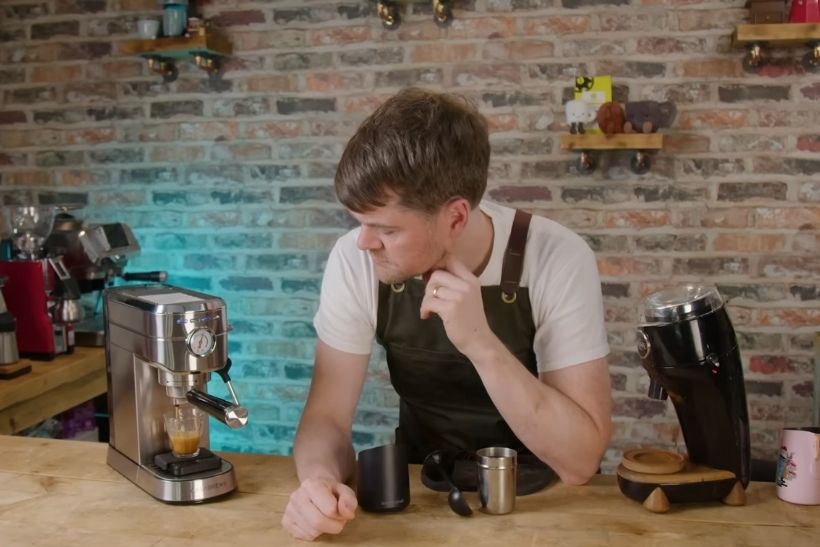
This is such an easy win: get a burr grinder (manual or electric, but electric is less effort & faff), buy freshly roasted beans, and grind them yourself (more on this below).
You can’t dial in by shot time with pressurised baskets like you can with standard baskets, but you can tweak grind by taste. Freshly ground coffee is almost always a big step up, and you don't need a pricey grinder, either. If you're using dual-walled baskets, the Baratza Encore or Wilfa Svart are both great choices, which also work fine for manual brew methods.
If you need to go lower price, that's fine, but avoid the blade grinders & the “flat grinding wheel” grinders (tip, if it's under about £60, it's probably one of these!).
What Einstein Said About Coffee
As the famous (not Einstein, actually) quote goes: “Insanity is using the same coffee beans over and over again and expecting better-tasting espresso”, or words to that effect ;-).
Most supermarket coffee is a commodity product, like the salt & sugar you may be dropping in your trolley. Just as you wouldn't simply buy “wine”, your palate has probably been spoiled by great coffee-shop coffees, to the point that just buying “coffee” also isn't working for you.
Upgrading your home coffee machine is a step in the right direction, but if you're looking for a leap, you'll want to try upgrading your coffee beans, which is easier than it sounds; there are many small-batch roasters in the UK. You probably have one just down the road that you could call into and grab some mega-quality, freshly roasted coffee beans from.
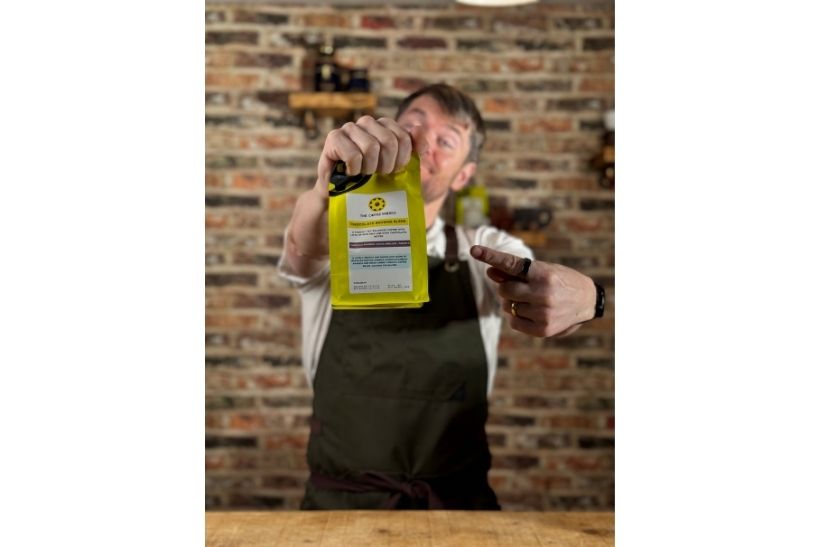
You're also very welcome to try my coffee at Cworks. We roast to order (often on the day of dispatch), and we offer very reasonable pricing, often not much more (in some cases even less!) than supermarket brands. If you're wondering why our coffee is so affordable (this is a question I'm asked a lot), this is very simple:
Packaging: We (you) don't spend a fortune on stuff that ends up in the bin/recycling.
Advertising: We (again, you) spend virtually nothing on advertising. I paid in advance, by investing tens of thousands of hours building this blog and the Coffee Kev YouTube channel, and now have an audience I can tell about my coffee. We pass this saving on to you, as we don't need to build costly advertising into our pricing.
We also offer free 24-hour delivery on all orders over £10, and we have a range of over 25 different coffees from crowd-pleasing espresso blends to high-scoring single origins.
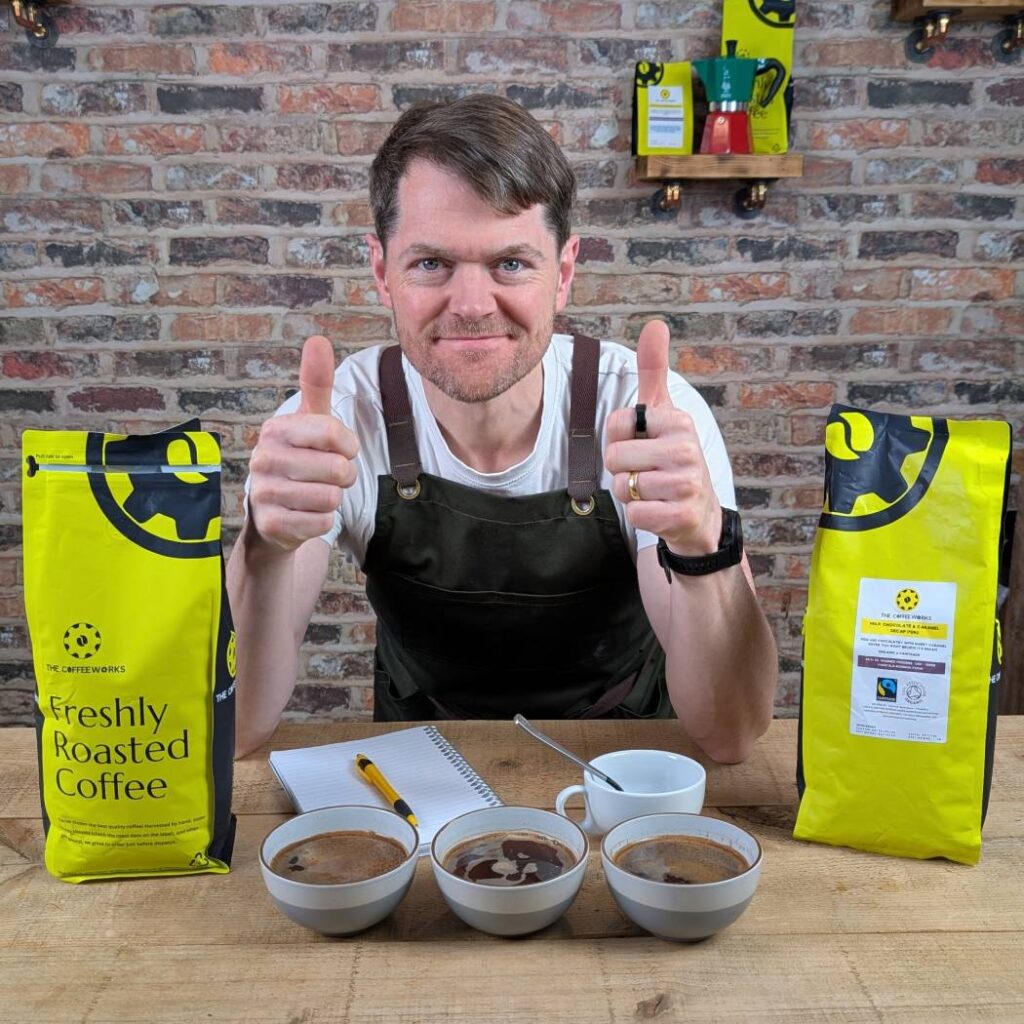
If you’re using pre-ground with this machine, make sure you select espresso grind for dual-walled (pressurised) baskets (at Cworks, we grind as we're bagging up orders, by the way).
What’s The Steam Wand Like?
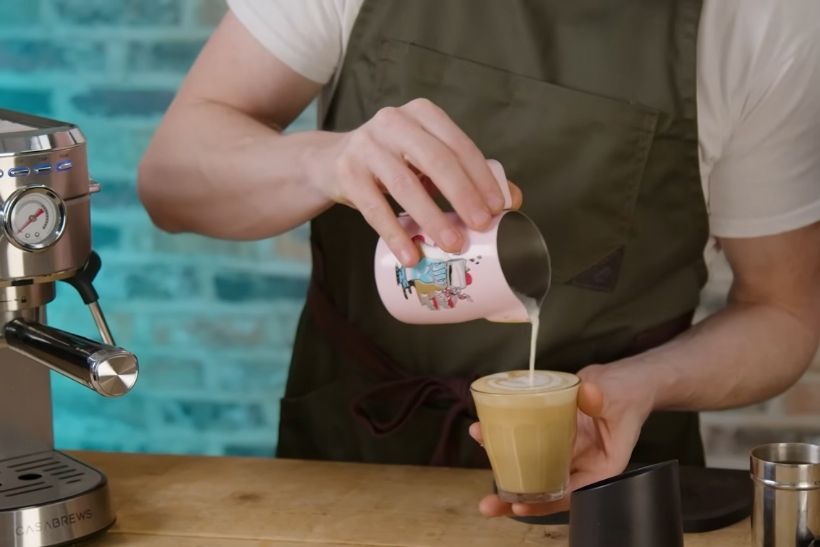
I’m really impressed with it, to be fair. The steam power is pretty good for a machine at this price: only about 5 seconds slower than a Dedica to steam 170 ml of milk to 60°C. Not much in it. It also produces a really nice milk texture for lattes, cappuccinos, and flat whites, and what's really quite impressive is that the milk doesn't stick to it.
It isn't a “no-burn” wand like the steam wand you'll find on some pricier machines, but it behaves like one in that regard. Milk just drops off it. I don’t know why… but I like it.
What’s The Pre-Infusion Like?
It’s what I call “pre-brew/pre-infusion.”
About 2.5 seconds of water hits the puck at full pressure, then there's a 2.5-second pause, then the shot continues.
Does It Have a PID?
As far as I can tell, no. Despite what the blurb suggests.
What’s a PID?
A PID (Proportional–Integral–Derivative) controller is a smart temperature control system that keeps the brew water at a much steadier temperature than a basic thermostat, using Proportional, Integral and Derivative settings.
Why it matters:
Steadier temperature = more consistent shots. It helps reduce the classic “one shot great, next shot weird” problem and makes it easier to dial in your coffee, especially when pulling back-to-back shots.
Casabrews said “PID”, but it doesn’t behave like a proper PID-controlled machine, and from what I've been able to ascertain, it has a temperature controller, but not a PID temperature controller. I've seen a few of the budget brands using the term PID where I'm not sure it's accurate, and I think there's some misunderstanding going on by some marketing departments.
Basically, if there's a temperature sensor somewhere feeding back to the mainboard, some brands are referring to this as a PID, but it's only a PID if it's a Proportional–Integral–Derivative controller.
Does It Have a 3-Way Solenoid Valve?
Again… I’m saying no.
Casabrews told me yes, but after backflushing, it takes quite a long time for pressure to drop, and I can’t see an obvious exit path for a proper three-way valve. At this price, it’s also not really “three-way solenoid territory”. As far as I can tell, it’s using a spring valve.
Practical tip: water entering the group can be a bit forceful, so if you’re using a standard basket, you might want to use a puck screen to protect the puck.
Pump Pressure (Marketing Nonsense Explained)
This machine has a 20-bar pump… and that number does not mean better espresso.
Pumps don’t “create pressure.” Resistance creates pressure. The bar rating is the maximum pressure at no flow, at which the pump will continue to run.
Note the “at no flow” part. Insinuating that the max bar rating is linked to espresso quality is laughable ;-). You probably wouldn't want to pull shots at anything like 20 bars anyway.
- Pressurised basket espresso: target around 12 bar
- Standard basket espresso: target around 9 bar or less
So if you see “20 bar = better tasting espresso”… ignore it. That’s marketing fluff.
Does It Have a 9-Bar OPV?
An overpressure valve, or OPV, limits the pressure in the basket. You'll usually find one of these in more premium home espresso machines. For example, most of the Sage espresso machines have a 9-bar OPV, and it just makes it a bit easier to dial in.
I can see from the pressure gauge that there is a saftey valve that stops the needle, but the gauge has no bar markings. My guess is around 15 bars.
The Pressure Gauge
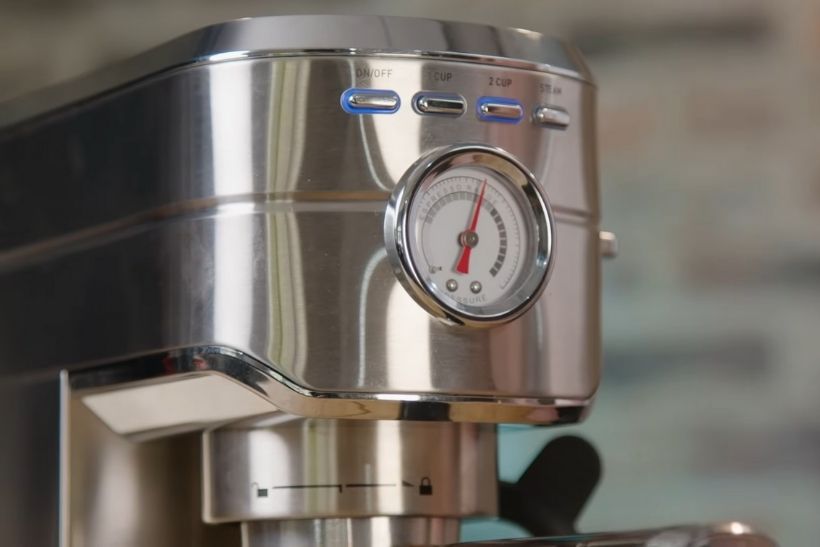
The pressure gauge is helpful… to a degree.
It doesn’t have bar markings, as I've mentioned, so it’s not a proper diagnostic tool (same is true of the Barista Express & Express Impress), but it can help you spot obvious grind issues:
- If you use pre-ground and the needle slams into the black area, your grind is likely too fine.
- If it barely moves into the grey area, your grind is likely too coarse.
Who Is This For?
Out of the box, with the pressurised baskets, this is for anyone who wants a simple way to make espresso and espresso-based drinks using pre-ground coffee.
- It’s easy to use
- You’ll probably save money vs pods
- It makes great milk texture for lattes, cappuccinos, flat whites, etc.
How to upgrade your results
- Step 1: Get a burr grinder and grind fresh beans
- Step 2: If you want to go further, use a better grinder + standard basket so you can dial in properly
Casabrews CM5418 vs De’Longhi Dedica

| Feature | Casabrews CM5418 | De’Longhi Dedica (EC685 / “Dedica Style”) |
|---|---|---|
| Typical price (UK) | £149 on Amazon | £229 Now £152 on De'Longhi |
| Type | Domestic/entry-level espresso machine (semi-auto) with pressurised baskets | Domestic/entry-level espresso machine (semi-auto) with pressurised baskets |
| “Inspiration” / vibe | Very Dedica-esque (slim, simple, budget-friendly) — with a few “extra spec sprinkles.” | The original slim, kitchen-friendly “gateway” espresso machine |
| Heating system | Thermoblock | Thermoblock |
| Portafilter size | 51mm | 51mm |
| Baskets included | Pressurised (dual-walled) single & double | Pressurised baskets (and Dedica is well-known as an easy “upgrade to standard basket” candidate) |
| Pump rating (marketing number) | 20 bar (ignore the number — resistance creates pressure) | 15 bar (also a marketing number — not an “advantage”) |
| Pressure / OPV situation | Has an OPV/safety valve (in testing, it looks like it limits pressure; gauge has no bar markings, sothe exact value is unclear) | Classic domestic design: designed around pressurised baskets; tends to brew “high pressure” vs true 9-bar machine.s |
| Pre-infusion | Automatic “pre-brew / pre-infusion” (short blast + pause) | Automatic pre-infusion (helps reduce channelling vs zero pre-infusion machines) |
| Steam wand | Single-hole “pro” style wand — surprisingly good milk texture, and weirdly easy to wipe clean | Panarello-style wand (but unusually capable once you learn it / tweak it) |
| Steam speed (roughly) | ~Under a minute to steam 170ml to ~60°C (including heat-up) | Very capable for the class (many people get latte-art worthy texture with a bit of technique) |
| Temperature options | No confirmed PID (likely thermostat-based) | Adjustable brew temperature (rare at this sort of price) |
| Pressure gauge | Yes (no bar markings, but useful to spot “too fine / too coarse”) | No (you dial in by taste/flow, not by gauge) |
| Heat-up time | ~50 seconds (run a blank shot first for consistency) | Quick thermoblock warm-up (still benefits from flushing to warm the group/portafilter) |
| Noise/vibration | ~50 dB at 1m; typical vibration pump “cup dance” possible | Typical vibration pump behaviour for the class |
| Best for | Budget espresso + milk drinks, especially if you like the idea of a pressure gauge and a more “proper” wand feel | The safe bet for a first traditional espresso machine — proven track record, huge community, easy upgrade path |
| Reasons to pick it over the other | You want Dedica-style espresso on a budget, but like the idea of a gauge + single-hole wand “out of the box.” | You want reliability, strong community support, easy modding/upgrade options, and you trust De’Longhi long-term. |
In performance terms, it’s not a million miles away from a Dedica, and for the money, it’s impressive.
Where the CM5418 wins: the steam wand is genuinely good, and the pressure gauge is handy (even if it’s not properly marked).
Where the Dedica still has the edge: De’Longhi’s track record. The Dedica might be “cheap”, but it’s also one of the most reliable budget espresso machines out there, and that matters if you want something to last years rather than months.
Casabrews Ultra Espresso Machine Review (Sage/Breville-Inspired)
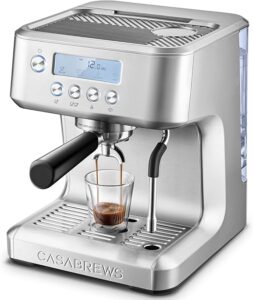
Now for the one that had people properly pestering me: the Casabrews Ultra.
Casabrews is a relatively new brand, and one of several that have emerged over the past few years with machines that look spookily reminiscent of Sage.
I try to swerve machines like this, simply because there are so many similar options out there.
And the issue for me with machines like this, and I’m not talking specifically about Casabrews here, I’m talking generally about the whole “budget Sage lookalike” category, is this: replicas aren’t necessarily alternatives.
The reason Sage have done so well is they’ve nailed the fundamentals of espresso while making machines that are more affordable, more user-friendly, and more kitchen-friendly than traditional home-barista kits.
Sage machines nearly always have things like: nine-bar OPVs, PID control, pump-controlled gentle ramp-up pre-infusion, and (on most models) three-way solenoid valves.
You can replicate the looks of a machine at a much lower price, but if you’re not replicating those fundamentals, you’re producing a cheaper replica, not a real alternative.
It’s the Ferrari kit-car problem. If it looks like a Ferrari but has a 1.8L engine under the bonnet… no one’s calling it an “alternative Ferrari”, are they? Sometimes I’m surprised, though. So… is the Casabrews Ultra going to surprise me?

Availability
Unfortunately, the Casabrews Ultra is not currently available! Why this is, I'm not entirely sure, although I did hear about some faults (not at all uncommon for new machines), so it could be that they made them unavailable while sorting out a batch issue.
If you look for the option to join my Brew Time mailing list, I'll drop you an email if/when this changes.
Specs & Dimensions
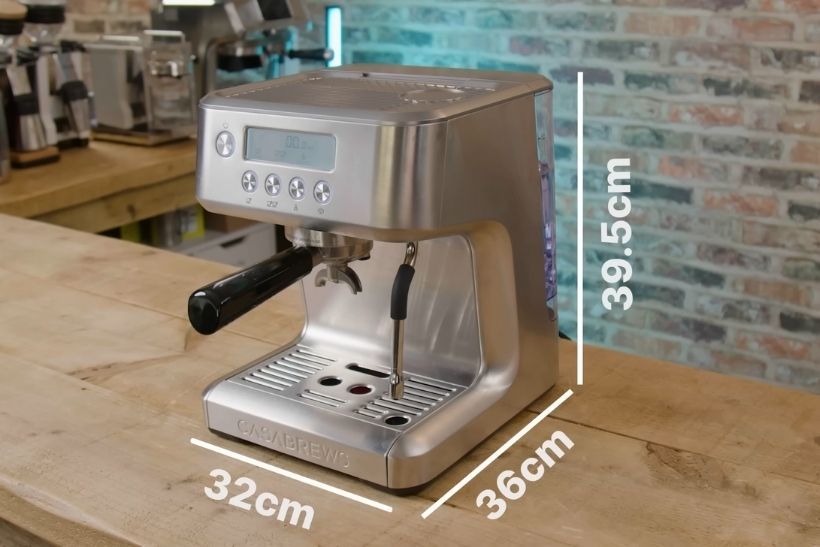
- Dimensions: 32cm wide × 39.5cm tall × 36cm deep
- Heater: Thermoblock
- Group & portafilter: 58mm
- Baskets: single & double, standard & pressurised
- Temperature control: adjustable PID (4 brew temp settings)
- Temps: 90, 92, 94, 96°C
- Pump: 20-bar vibration pump
- Water tank: stated 2.2L, but actually closer to 2.5L
- Low water alarm: in theory (didn’t seem to work on my unit)
- Shot buttons: programmable volumetric single & double
- Shot timer: yes (0.5-second increments)
- Steam timer: yes (0.5-second increments)
- Pre-infusion: pre-brew style
- Interface: LCD
- Drip tray: deceptively large (0.5L)
- Steam wand: pro wand, single-hole tip
- Tamper: proper tamper (lightweight/plastic, but proper nonetheless)
First Impressions
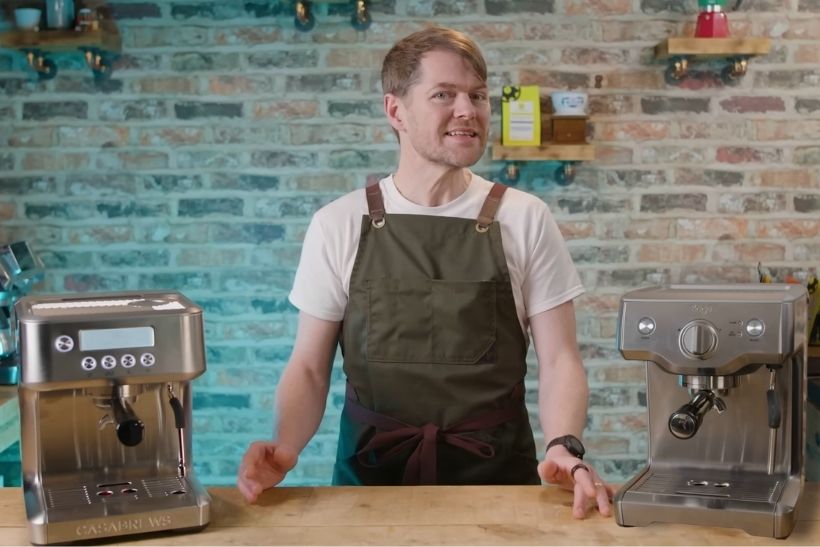
The first thing I thought when this was unboxed was that it looks even more like a Sage machine than a Sage machine… which is quite a feat.
It looks like a cross between the Bambino and the Duo Temp Pro.
But aside from that, it actually looks and feels surprisingly good for the money. It’s fairly compact, but it’s got a big enough footprint to feel stable on the counter, and there’s a bit more stainless steel (and a bit less flimsy plastic) than I expected at this price.
Price
At the time of filming, the RRP was:
- UK: £199.99
- Germany: €259.99
- USA: $249.99
Temperature Control (This is the interesting bit)
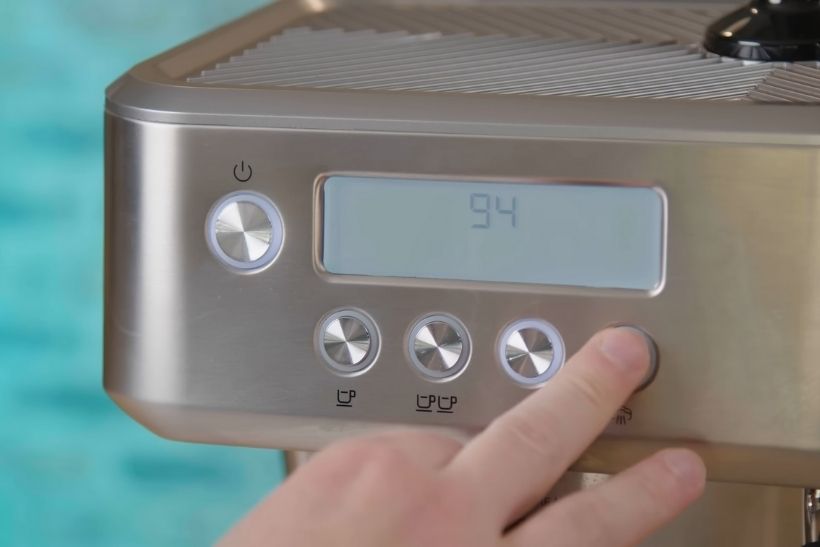
This machine has an adjustable PID (or P.I.D if you’re the acronym police).
A PID is basically an algorithmic temperature controller that usually provides better temperature stability than a simple thermostat.
Now, it’s not the only machine at this price with a PID; the Gaggia Espresso Style Deluxe & Evolution, for example, do, but a sub-£200 machine with an adjustable PID is quite special.
It gives you four brew temperature settings: 90, 92, 94, and 96°C.
Is it as good as the PID control on Sage machines? I can’t tell you. You’ll need to pester Lance Hedrick to do something nerdy with a Scace and a concerned facial expression. But in general, I’d rather have a PID than a thermostat.
Test Results (Speed, temps, noise)
- Heat up: just under a minute (beeps when ready)
- Steam ready time: ~22 seconds
- Steam test: 170ml to 60°C in about a minute, so around 1:20 including heat up
- Shot ready after steaming: ~20 seconds (press hot water after steaming to cool down)
- Hot water temp: mid-80s °C
- Hot water speed: 200ml in ~54 seconds
And the surprising part: it’s quiet. The pump is one of the quietest I’ve come across at this price, around 40–42 dB from 1 metre. More importantly, the vibrations aren’t as violent, so your cup is far less likely to do the cha-cha off the drip tray.
Pre-Infusion
This is the same “pre-brew” type of pre-infusion: about 2.5 seconds of water at full pressure, a 2.5-second pause, then full-pressure extraction.
For traditional espresso roasts and “classic espresso” results, I don’t think this matters all that much. If you’re trying to pull sweet, balanced espresso from light roast single origins on a budget machine… let’s just say you’re playing espresso on hard mode.
Pump Pressure (again: marketing)
Yes, it’s another “20 bar” machine. And no, that doesn’t mean “optimal extraction”.
Pumps create flow. Pressure builds depending on resistance. The “20 bar” number is basically the maximum it can generate under near-full resistance. If you hit max pressure, you’ve probably choked the machine, which is not what anyone should be aiming for unless you enjoy espresso that tastes like regret.
OPV Setting (the big difference vs Sage)
The OPV (over-pressure valve) is set to around 15 bars (according to Casabrews).
Quick definition: OPV (Over Pressure Valve)
An OPV is a safety/pressure-limiting valve that stops the machine from building silly-high pressure by releasing excess pressure when it hits a set limit. It matters because espresso generally tastes best when brew pressure is kept sensible and consistent (around the classic 9-bar-ish zone for “proper” espresso), and an OPV helps prevent the “15–20 bar marketing madness” from turning your shots into a bitter, channel-prone mess.
It’s fairly common for machines that ship with both pressurised and standard baskets to have a higher OPV, because pressurised baskets are designed to build higher pressure and then force coffee through a tiny hole to mimic crema.
But compared to Sage machines, which tend to sit around 9 bars, this is one of the key reasons I wouldn’t call the Ultra a straight “Sage alternative.”
In an ideal world, machines like this would have an externally adjustable OPV, so you could set it to 9 bars for standard baskets and higher for pressurised. We’re not really there yet at this price… but I do think it’s coming.
What’s the espresso like?
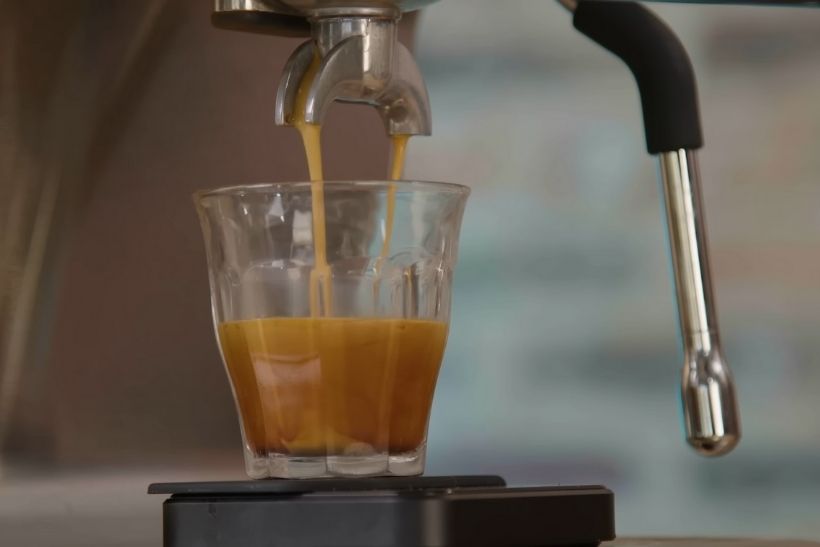
I always answer this question, even though it’s not the whole story, because the espresso machine itself isn’t the most important factor in espresso taste.
Better machines can help (temperature stability, consistency, easier pressure management)… but espresso quality mainly comes down to:
- The beans
- The grinder
- Your ability to dial in
So what the espresso tastes like on the Ultra will depend massively on the grinder you pair it with, the beans you’re using, and your barista's skills.
Shot Timer
It has a shot timer… in half-second increments, which is unusual. Do I think half a second matters? Not really. But having a timer at all at this price is great. I love a shot timer, me.
It also runs when steaming milk, which is surprisingly handy once you’ve worked out how long your usual milk takes.
Steam Wand
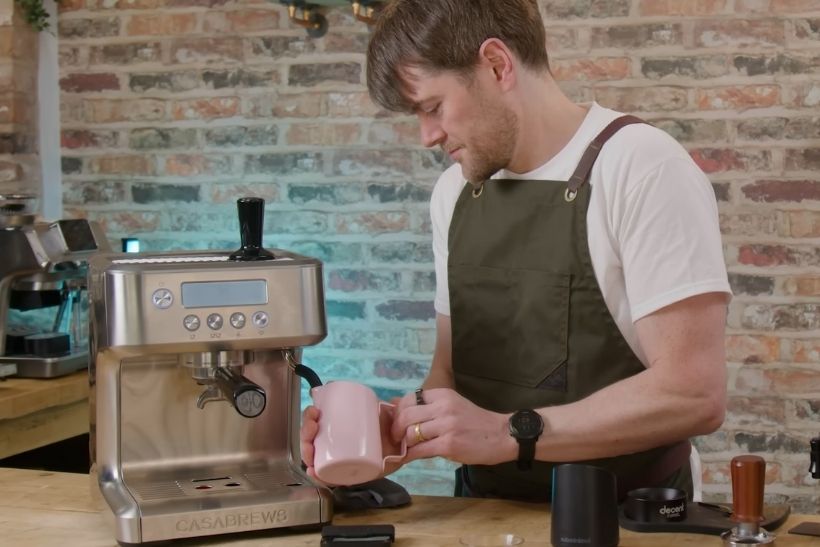
It works well, and it’s consistent. It produces an excellent milk texture. The whole process from pressing steam to finishing a jug is usually around 1:20 to 1:30, depending on milk volume.
It’s not quite as fast as the steam wand on Sage machines, but it does the job well, and again, the steam timer makes life easier once you’ve dialled in your routine.
Three-Way Solenoid Valve?
Casabrews say yes, it has a three-way solenoid, and that’s impressive at this price with everything else it has going for it.
But… it doesn’t behave like any other three-way solenoid machine I’ve used. I expected it to eject excess pressure and water instantly after a shot, and it didn’t quite do that in the way I’d expect.
So either:
- It’s got a solenoid that’s behaving oddly,
- It’s implemented differently,
- Or something is up with the unit I tested.
I’ll be getting my espresso engineer friend Radu at Espressorepairshop.co.uk to have a look, and I’ll update this section accordingly.
Who is it for?
I think the Ultra makes the most sense for people who are focused on shot quality per pound spent, and who want to spend as little of the budget as possible on the machine so they can put more into the grinder.
If you were looking at something like a De’Longhi Stilosa or Dedica, for example, you may benefit from going with this instead in terms of performance: better temperature stability, adjustable brew temp, programmable shot buttons, 58mm kit, and it feels like a lot for the money.
I should be clear, though: Delonghi have a fantastic reliability track record. So I’m talking here about performance and short-term value, not necessarily long-term peace of mind.
Casabrews Ultra vs Sage (Bambino/Duo Temp Pro)
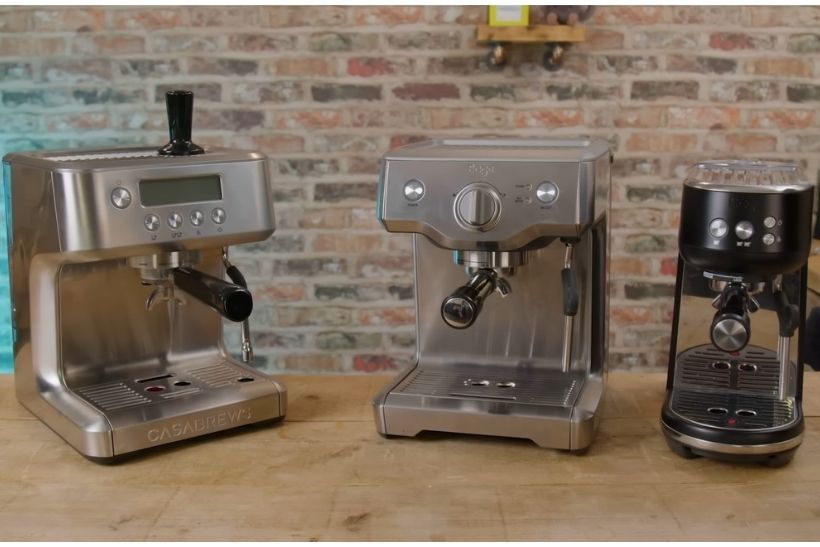
| Feature | Casabrews Ultra | Sage Bambino | Sage Duo Temp Pro |
|---|---|---|---|
| Typical price | Discontinued for now (may come back in 2026) | £329 Now £280 on Sage |
£399 Now £297 on Sage |
| “Inspiration” / positioning | Sage/Breville-style “feature-heavy” budget alternative | Compact “fundamentals done right” entry Sage | More “traditional manual machine” feel (dial workflow) |
| Heat-up time | ~1 minute (beeps when ready) | ~3 seconds (ThermoJet) | ~30 seconds to reach brew temp (thermocoil) |
| Heater type | Thermoblock | ThermoJet | Thermocoil (1600W, stainless) |
| Portafilter / group | 58mm group & portafilter | 54mm portafilter | 54mm portafilter (heavier “proper” PF vs Bambino stock) |
| Baskets included | Single & double, standard & pressurised | Pressurised and standard baskets included | Single/double + single/dual wall (standard/pressurised) |
| PID temperature control | Yes (adjustable) — 4 temps: 90/92/94/96°C | Yes (fixed ~93°C) | Yes (not adjustable) |
| OPV / brew pressure | OPV ~15 bar (higher cap; actual brew depends on grind) | 9-bar OPV | 9-bar OPV |
| Pre-infusion | “Pre-brew” style: ~2.5s on / 2.5s pause | Low-pressure pre-infusion | Automatic low-pressure pre-infusion |
| Shot controls | Programmable single/double + shot timer (0.5s increments) | Shot buttons (simple/fast workflow) | Manual dial workflow (no shot buttons) |
| Steam wand | Manual “pro” wand, single-hole tip + steam timer | Manual wand, single-hole tip | Manual wand on ball joint (forgiving, consistent) |
| Steam-ready time | ~22 seconds | Fast (ThermoJet system) | Slower/forgiving vs some higher power machines |
| Milk test (170ml to 60°C) | ~1:20 incl. steam heat-up (UK 220V) | Capable microfoam (manual learning curve) | Forgiving steaming (not “race pace” powerful) |
| Hot water | Via wand / function (mid-80s °C, ~200ml in ~54s) | Dedicated hot water button | Via steam wand (toggle with selector) |
| Noise/vibration (roughly) | Very quiet ~40–42 dB (less cup-walk) | Vibration pump ~50–55 dB | Typical vibe-pump behaviour (varies) |
| Water tank | 2.2L (often closer to ~2.5L real-world) | 1.5L | 1.8L (nice handle/access) |
| Footprint/kitchen fit | Compact but “proper machine” footprint (32W x 36D x 39.5H cm) | Very compact (~16cm wide) | Compact: ~26W x 31D x 33.5H cm |
| Best for | Best “spec-sheet value” if you want 58mm + adjustable temp + timers on a budget | Best fast, small, no-faff machine with proper 9-bar fundamentals | Best “manual machine” feel with Sage user-friendliness + strong longevity vibes |
In terms of performance, this feels like a cross between the Bambino and the Duo Temp Pro, with a couple of pros and cons.
Where the Ultra is surprisingly strong:
- Feature set for the money: programmable volumetric buttons + adjustable brew temp is rare at this price
- Quiet pump + less vibration: less “cup walk” than a lot of vibration pump machines
- Timers: shot timer + steam timer are genuinely useful
Where Sage still win (the fundamentals + long-term support):
- 9 bar OPV: Bambino/Duo Temp Pro tend to sit around nine bars, Ultra is around 15
- Pre-infusion control: Sage generally do a better job with gentle ramp-up and control
- Brand history + support: established warranties, parts availability, repair ecosystem
- Longevity: lots of people get 5–10 years out of machines like the Duo Temp Pro
So is it a straight alternative to a Bambino or Duo Temp Pro? No. It’s not quite up to that overall standard. But for the money, it ticks a lot of boxes I didn’t expect it to tick.
What I like
- Serious value for money: programmable shot buttons + adjustable brew temp at this price is impressive
- Quiet pump + calmer vibrations: less cup-dancing
- Timers: shot + steam timer are great quality-of-life features
- Looks & feel: more stainless steel than expected, feels more “proper” than many budget lookalikes
What I like less
- OPV at ~15 bars: I’d love a 9-bar OPV or adjustable OPV (but that’s asking a lot at this price)
- 3-way solenoid behaviour: if it has one, I’d like it to behave more like one when it comes to post-shot pressure relief
- Brand maturity: it’s a newer brand, and long-term support/parts isn’t as proven as Sage/Breville
Did it surprise me?
Yes.
Not because it’s secretly a Bambino killer, it isn’t, but because it offers a genuinely big list of useful features at a price point where I didn’t expect them.
If I were hunting for the best bang-for-buck espresso machine to pair with a really good grinder (which, as I’ve said before, is the sensible approach that nearly no one takes)… this would be on my shortlist.
Which Casabrews Machine Should You Buy?
Right. If you’re looking at Casabrews coffee machines, you’re probably in one of two camps:
- You want a slim, simple, Dedica-style machine that uses pressurised baskets out of the box and makes decent espresso-based drinks with minimal fuss.
- You want a more “Sage-style” setup with a 58mm portafilter, standard baskets included, more control, and better upgrade potential as your grinder and skills improve.
Pick the Casabrews CM5418 if…
- You want a compact, no-drama machine that feels like a Dedica alternative
- You’re mostly using pressurised baskets (pre-ground or basic grinder)
- You care a lot about milk texture at this price (the wand is surprisingly good)
- You like the idea of a pressure gauge as a rough “is my grind totally wrong?” indicator
Pick the Casabrews Ultra if…
- You want the “budget Sage/Breville vibe” with a 58mm setup
- You want more control (adjustable brew temp, programmable volumetrics, timers)
- You’re planning to invest in a grinder and actually learn to dial in
- You want maximum performance per pound spent, and you’re okay taking a slightly bigger punt on brand history
My blunt take
If you want a small, simple, Dedica-like machine for espresso + milk drinks with minimal fuss, the CM5418 makes sense. Just remember, De’Longhi still has the reliability edge.
If you want the most features and control for the money, and you’re pairing it with a decent grinder, the Casabrews Ultra is the more interesting machine. It’s not a straight Sage alternative, but it is a lot of espresso machine for the cash.
And if you’ve got either of these (or you’re thinking about them), let me know in the comments: which one are you leaning towards, and what kind of coffee are you trying to make?
The post Casabrews Espresso Machine Review: Better Than Sage or De’Longhi? appeared first on Coffee Blog.
By: kevTitle: Casabrews Espresso Machine Review: Better Than Sage or De’Longhi?
Sourced From: coffeeblog.co.uk/casabrews-espresso-machines/
Published Date: Wed, 31 Dec 2025 18:36:58 +0000