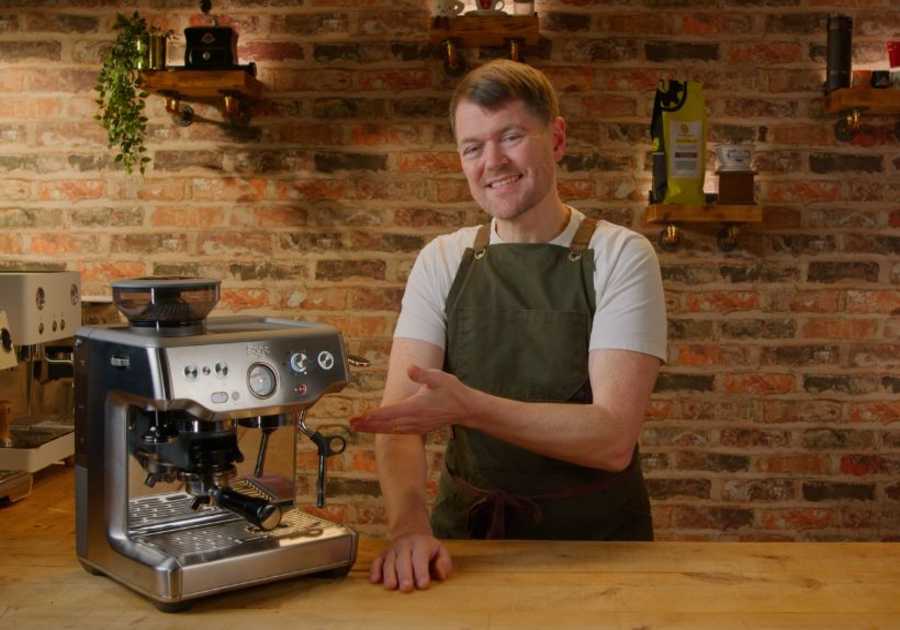
The brand-new Sage Barista Express Neo is the latest version of the Barista Express, and I have to say, it’s a revelation! Was I expecting this, honestly? Not really. Given the number of manufacturers jumping on the cold brew bandwagon, I suspected this would mainly be the good old Barista Express with the cold brew feature. I was wrong!
Yes, it has the “cold brew” setting, but the game-changing things here are Smooth Shot (Auto flow-rate adjustment), grind by weight & shot timer, although it doesn’t stop there!
Before we get into that, I should probably introduce myself in case you’ve not been here before. I’m Coffee Kev, my first name is literally coffee ;-), so I’m clearly coffee-obsessed. As well as being behind CoffeeBlog, CoffeeKev.com (for our coffee-loving friends over the pond in the U.S.) and the Coffee Kev YouTube channel, I also founded Cworks.co.uk, which you should probably visit if you want to buy mega quality, freshly roasted coffee at sensible prices :-).
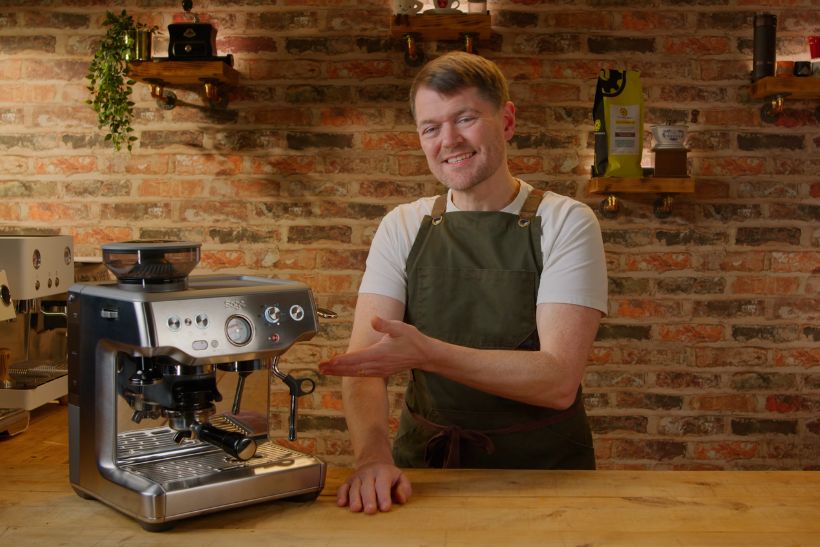
Getting back to the Barista Express Neo, though. In this review, I’ll go through the Neo’s full specs sheet; I’ll talk about what’s changed from the original Barista Express, including the headline features, of course, and all the other stuff that I think is worth knowing about the new Barista Express, including my likes, dislikes, who I think it’s for, and the alternatives at this price point.
Quick Navigation
- What Is the Barista Express Neo?
- Barista Express Neo Specs
- Grind by Weight
- Smooth Shot
- Pre-Infusion
- Barista Assistance
- The Heat-Up Flush
- Shot Timer
- Brew Temperature
- Control Panel & Drink Options
- Cold Brew (and a Cold Foam Trick)
- Steaming Milk
- Hot Water
- Milk Drink Workflow
- The NFC Setup Card
- Price
- What I Like
- What I Like Less
- Who Is This For?
- What Coffee Beans Is This For?
- Alternatives
- Verdict
What Is the Barista Express Neo?
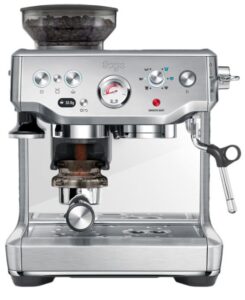
The Barista Express Neo is the new version of the Sage Barista Express, a compact, integrated-grinder portafilter espresso machine aimed primarily at people who want genuinely good coffee at home without turning it into a hobby that takes over their life.
It’s not a “bean-to-cup machine”, at least not in the traditional sense. The term “bean-to-cup machine” was coined in the late 80s for machines which have a brewing unit instead of a portafilter (filter holder), which made them automatic. All the user has to do is empty the grounds bin when prompted.
Retailers started to list the Barista Express and other integrated grinder machines in the “bean-to-cup” category, and brands seem to have caught on to this as a way to reach a more mainstream audience, which I don’t think is very helpful for the end user, who often get the impression that the Barista Express and similar machines are easier to use than “normal” espresso machines.
The fact is, the Barista Express IS a “normal” espresso machine; it’s a “proper” espresso machine with a portafilter. Other than having a built-in grinder, it really has little else in common with true bean-to-cup machines, including the fact that it actually makes “true” espresso. Bean-to-cup espresso is generally quite a bit less intense in taste and body, simply due to the way they extract espresso.
The Barista Express Neo, on the other hand, has a couple of features which bring it closer to true bean-to-cup machines in terms of convenience & lack of faff, while potentially improving the cup quality!
So while I suspect many people have bought the Barista Express over the years expecting it to be much easier to use than it is, I reckon a lot of people will find the Express Neo to be more along the lines of what they were probably expecting when it comes to ease of use while producing stonking espresso-based drinks.
Barista Express Neo Specs
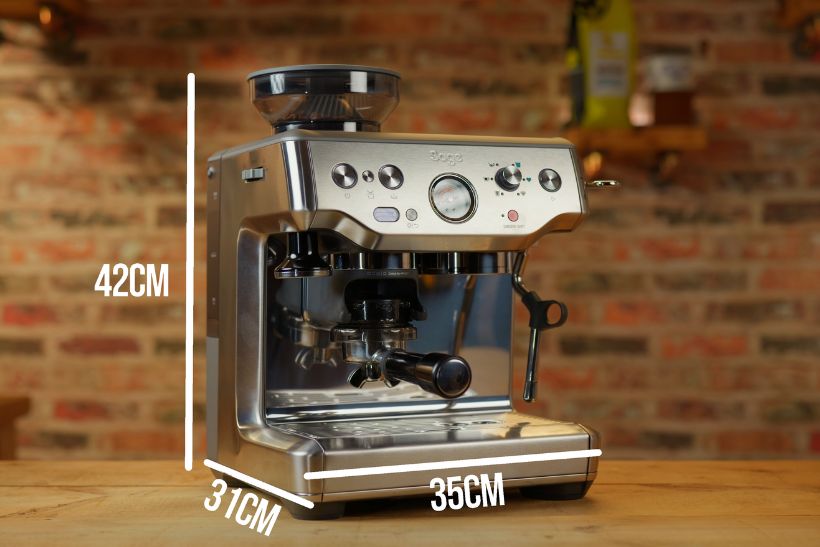
Dimensions: 35cm wide, 31cm deep, and just shy of 42cm tall.
The specs it shares with the original Barista Express:
- 2.5L water tank
- Thermocoil water heater
- 54mm group and portafilter
- Integrated grinder with 38mm conical burrs, removable, with internal adjustment
- 250g bean hopper, also removable
- Big drip tray with storage space behind it
- Pro steam wand with a single-hole tip and a separate water spout
- Roughly 30-second heat-up time (for the heater itself to reach temperature)
- Pressure gauge
The specs that differ from the original:
- 30 grind settings versus 18 on the original
- Still a single-hole tip wand, but a slightly chunkier version, cooler to the touch, and easier to wipe clean
- Digital display, with a shot timer and various other functions
- Grind by weight, in collaboration with Acaia
- Smooth Shot feature for automatic flow rate adjustment
- Grind size guidance
- Cold-brew style coffee
- Drink settings for single and double espresso, lungo, custom espresso, cold brew & custom cold brew
- NFC product key to make the setup more immersive
Now let’s get into the interesting stuff, starting with:
Grind by Weight
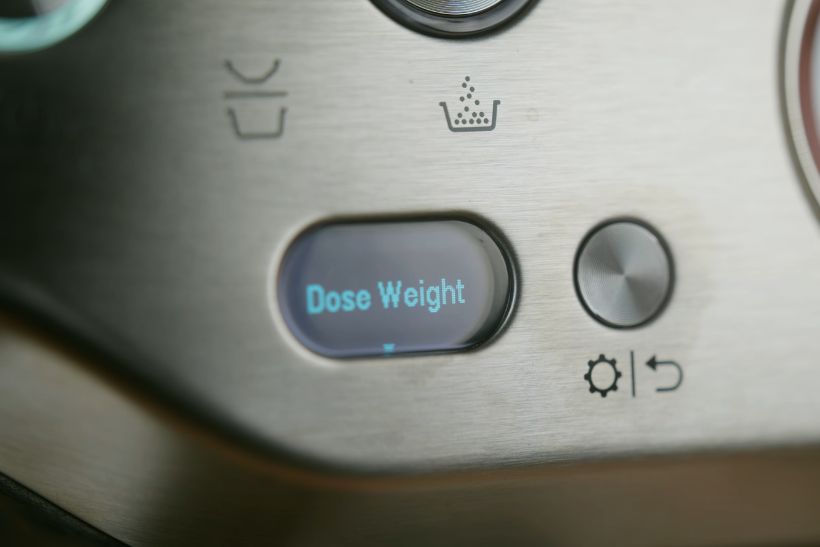
This is quite a big deal! Instead of grinding by time, as the original Barista Express does, the Express Neo grinds by weight, meaning, as with the Meraki, for example, you set how many grams of coffee you want it to grind for each drink.
Not only is this more convenient than the simple timer-based grinding on the original Barista Express, this is also way better (or weigh better, hehe) for shot-to-shot consistency, as it means your brew ratio will be as expected, as long as you also program the shot volume.
Brew ratio is the relationship between the weight of the ground coffee and the espresso; for example, 36g of espresso from an 18g dose of ground coffee is a 1:2 ratio, and it’s a crucial part of the espresso recipe.
Shot time is often regarded as the be-all and end-all, but it’s completely useless without the ratio.
It’s quite common for me to hear from people who don’t understand why they’re not getting great-tasting espresso, even though they’re hitting the rule-of-thumb 25-30 second shot time. The reason is often simply because they weren’t taking the yield (espresso weight) into the equation, so they could have been getting a ratio anywhere between 1:1 and 1:6, either of which would usually taste pretty pants.

Is the Grind by Weight Accurate?
There are two things to consider here, accuracy in terms of how accurate the scales are in the traditional sense, and then consistency meaning if you set it to 18g, how close do you get to 18g for each dose.
Accuracy is a given, really, given that it’s using Acaia’s load-cell technology. If you don’t know Acaia, they’re the big name in coffee scales, and their benchmark espresso scales, the Lunar, are about £350! Still, I tested this anyway, and as to be expected, it’s incredibly accurate. Consistency is harder to get right in theory, because the firmware needs to be able to predict when to stop grinding, but it does a great job of this too. It’s usually with 0.1 – 0.3g of the target weight, and the most I’ve seen it out is 0.4g.
Smooth Shot
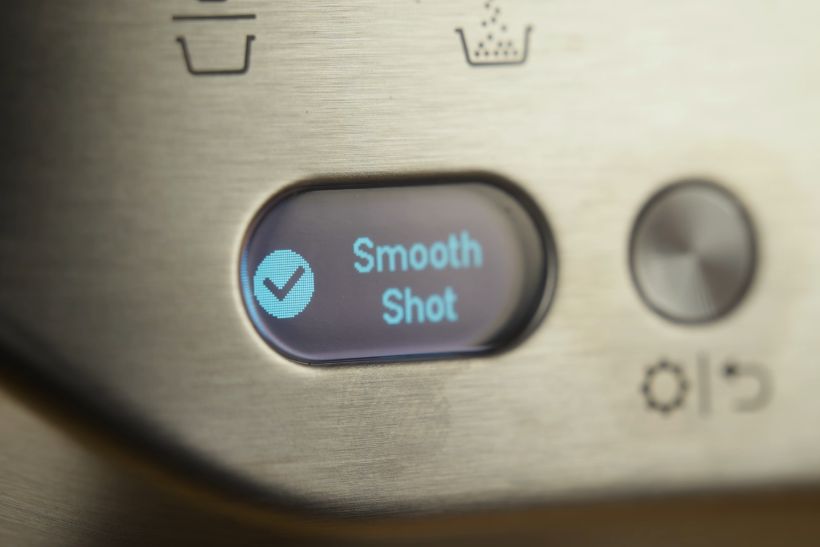
Portafilter espresso machines produce “true” espresso, which is why pro baristas use them. But there’s a catch: dialling in. This is the secret to amazing-tasting espresso, and it means
adjusting your coffee recipe to achieve the best-tasting, most balanced extraction from the beans you’re using. This is usually much less simple than it may sound!
The two most important components of the espresso recipe are:
- Brew Ratio. The relationship between the weight of ground coffee and the espresso: E.g. 36 of espresso from 18g of beans = 1:2 ratio.
- Shot time (flow rate). The total time taken to achieve your desired ratio, from first contact between the water and the ground coffee.
The Barista Express Neo handles the ratio very well thanks to grind-by-weight and volumetric shot control, which is great. The Smooth Shot feature, though, is not just great; it’s truly a game changer for home espresso.
Many of us obsess way too much about brew pressure. In reality, what matters most is flow rate, so if you can build a way for espresso machines to target a specific flow rate, you’ll make it much easier to produce great-tasting espresso. This is what Sage has done here, and from my testing, it works very, very well.
I said in my video review that you couldn’t really crank the grind size all the way to coarsest and still expect great results. From the testing I’ve done since recording that video, I think I was actually wrong there. The Smooth Shot feature actually works so well that even if I’ve cranked the grind to 25, for example, for a bean that I was dialled in at close to 10, the shot is still drinkable.
I think most people will get pretty decent results starting off at a relatively high grind setting, let’s say 20. If the needle isn’t passing the first s in smooth shot, just gradually go finer with the grind size until the needle gets a bit higher, and that’s really about as faffy as it needs to get, and you’ll probably never have an espresso that you don’t think is nice enough to drink!
Pre-Infusion
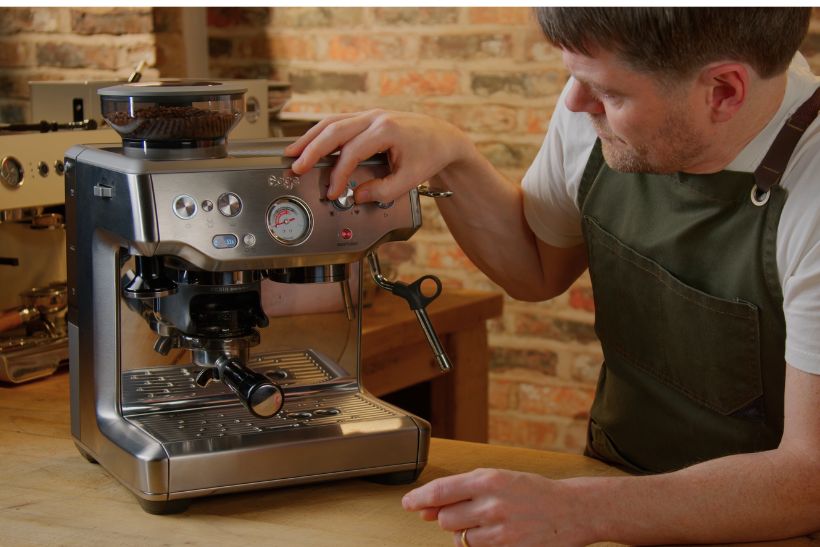
The Neo also has low-pressure pre-infusion, just like the original Barista Express and the Barista Express Impress. By default, it’s roughly the same 8 seconds, but if you press and hold the shot button, it stays in pre-infusion mode until you release it, for up to 60 seconds.
You can also programme the pre-infusion time anywhere up to 60 seconds in the custom shot settings, and you can do this with the Smooth Shot setting on or off.
This is probably not all that interesting or even useful to most people. If you’re a bit more into home barista geekery, and you’re considering the Neo so you can get fast drinkable shots with it when you don’t have time to faff, or so the “normal” coffee drinkers in the home can use it in normal mode, and you can geek out, the unusual control over preinfusion is quite a big deal.
Grind Size Guidance
This does have grind size guidance, meaning it’ll tell you what grind size to adjust to if it detects the flow rate was significantly off. I think they’ve done a really good job with it on this machine, actually, but I don’t really think you’ll need it.
It’s so simple to use; you can just look at the needle, and if it’s clearly not moving much beyond the starting point, you can grind a bit finer and you should still be getting enjoyable espresso in the meantime, which will improve as time goes on.
But, if you do follow the grind size guidance, from my testing it does a really good job at pre-empting where you should be grinding at based on the flow rate.
The Heat-Up Flush
Usually with thermocoil machines, the water runs through the heater fast when you flush the group, so it doesn’t flush at the same temperature it would with coffee in the basket.
For this reason, I’d usually recommend flushing using the Dual Walled basket in order to flush at closer to brew temperature. With the Neo, though, when you flush (pull a shot without coffee in the basket, but with the portafilter in place so you’re heating it up) the flow rate slows down, and it flushes at about brew temperature.
So this means that all you need to do in order to heat the machine up once it’s technically ready to brew is to lock the portafilter in the group, put your cup on the drip tray (so you’re warming up the cup too, and saving drip tray space) and press the shot button.
Shot Timer
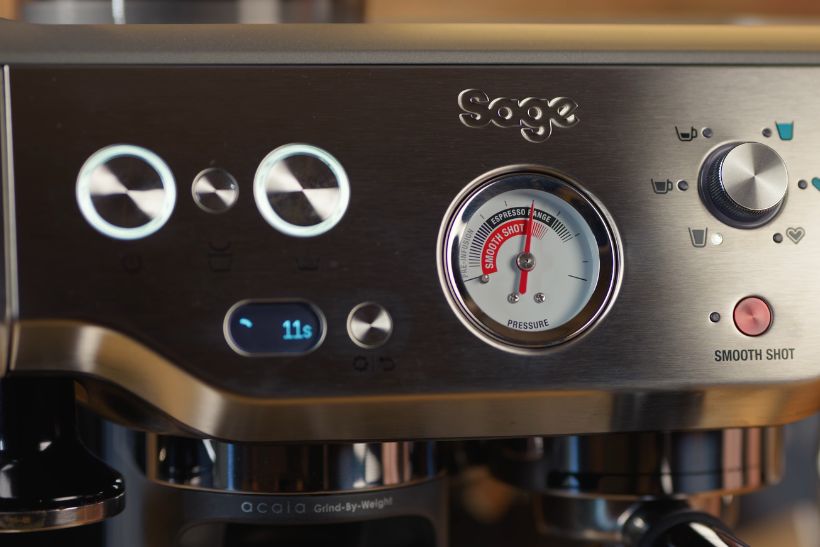
Anyone who doesn’t think an automatic shot timer is a big deal probably hasn’t used an espresso machine without one ;-). Yeah, scales have timers, but it’s a pain having to remember to press the timer each time you’re pulling a shot.
It’s for this reason that I’ve said in the past that I’d probably choose the Barista Pro over the Express, more so for the shot timer than the settings display, the Etzinger Baratza burrs, or the stepless adjustment.
So I’m very happy they decided to give the Barista Express Neo a shot timer, and I think this is something they really need to add to any future “Neo” machines, if they do decide to release a Bambino Neo, Bambino Plus Neo etc., as many people have been asking about in the comments on my Barista Express Neo Review on YouTube.
Brew Temperature
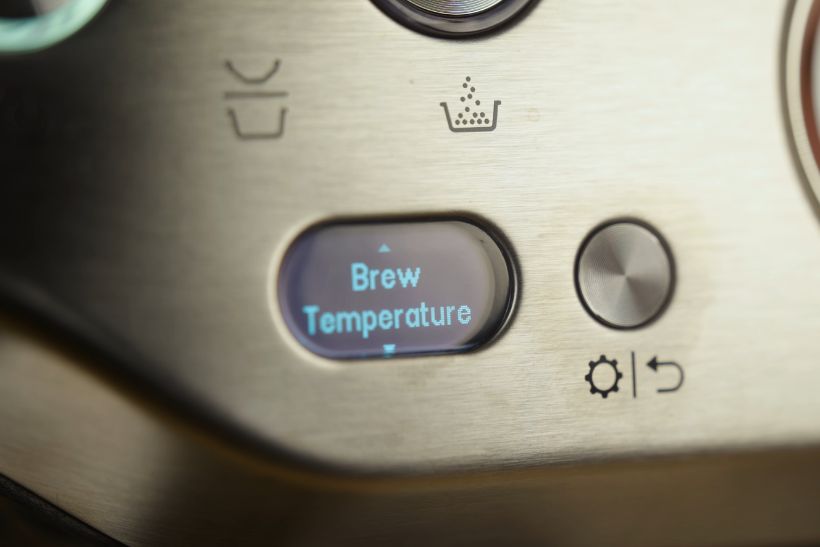
Brew temperature is another part of the espresso recipe, and you can find all the suggested recipes for my coffee beans at cworks.co.uk/brew-guides, by the way.
All Sage machines have a PID, which means a temperature controller with a feedback loop that helps keep the brew temperature as close as possible to the set temperature.
The Barista Express Neo has adjustable brew temperature, with 5 temperature settings. The settings relate to roast levels, with the highest being “very light” the factory-preset being “medium” and the lowest being “decaf roast”.
I’d recommend ignoring the roast-level references and treating them as 5 temperature settings, with medium roast being the medium temp, “decaf” being the lowest temp, and “very light” being the highest.
In terms of what they relate to, I’ll hazard a guess that medium is 93°C, and the others differ by 1°C, so the range will probably be from 91-95C. Why they don’t just give these temperatures, I’m guessing it’s because it’s a bit of a grey area, and they don’t really want to go there.
So if we say “medium-roast” is 93°C, where are we measuring that? The temp probe would usually be in the thermocoil, so 93 in the coil will probably be more like 91 in the group, so if they tell us that medium is 93°C, customers will test it and find it’s more like 91°C in the group, and they’re probably just making a rod for their own back, so I do get it.
I don’t think using roast level for temp settings works, though; firstly, it’ll give the impression that you can use a “very light” roast with this machine, and in my humble opinion this absolutely isn’t what these machines are made for.
Secondly, it reconfirms what many people assume: that brew temperature and roast level work on a linear basis like this, which I honestly don’t think they do.
This really isn’t a big deal, though; I’d say 90% of the people reading this can just leave it on the factory pre-set medium temp setting. Brew temperature would be the last thing in the recipe that I’d be adjusting when dialling in.
Control Panel & Drink Options
There’s a control panel with a digital display, which is great! It’s very simple to use, and contains all of the settings you’d ever need.
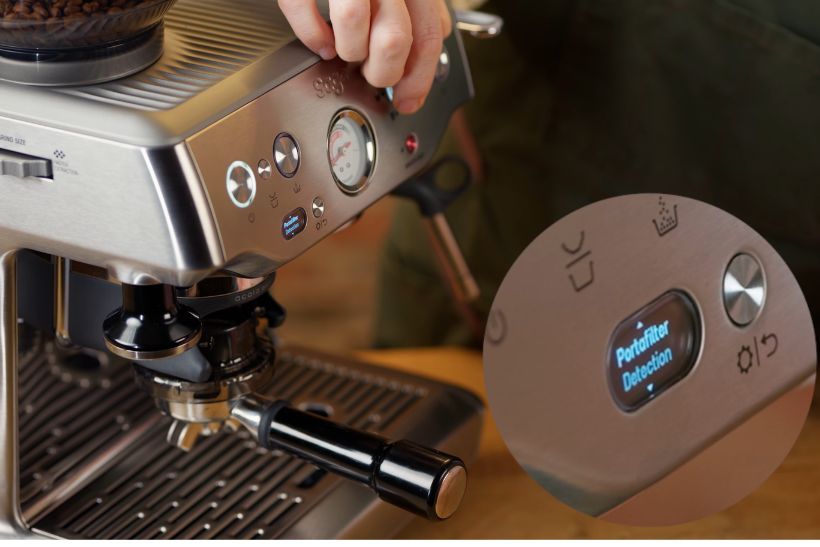
You use this to set the dose weight, the brew temperature, screen brightness, volume, and language; toggle grind-size guidance on and off; toggle portafilter detection and empty-hopper detection on and off, calibrate your scales; and run descaling, cleaning, backflushing and a factory reset.
The same screen also doubles up when you switch between the single and double basket, showing you which one you’ve selected, and it’s what you use to customise your drinks.
You choose your drink options using this screen too, and the options are single espresso, double espresso, lungo, custom shot, cold brew & custom cold brew.
In the custom shot menu, you can change pretty much everything: dose weight, pre-infusion time, and the target volume. It’s worth noting that the volume setting is what the machine is aiming for; the actual amount out won’t always be identical, since it depends on how much the puck itself soaks up.
Cold Brew Style Coffee
The Neo has a cold brew option and a custom cold brew setting; this is the same “cold brew style” coffee the Touch Impress makes, along with many other machines these days, including the Ninja Luxe Cafe.
The Barista Express Neo does give quite a bit of control over dose and yield, and although I don’t think any cold brew fanatics are going to be particularly interested in this, it’s not bad as far as this kind of espresso-machine cold brew goes, in my opinion.

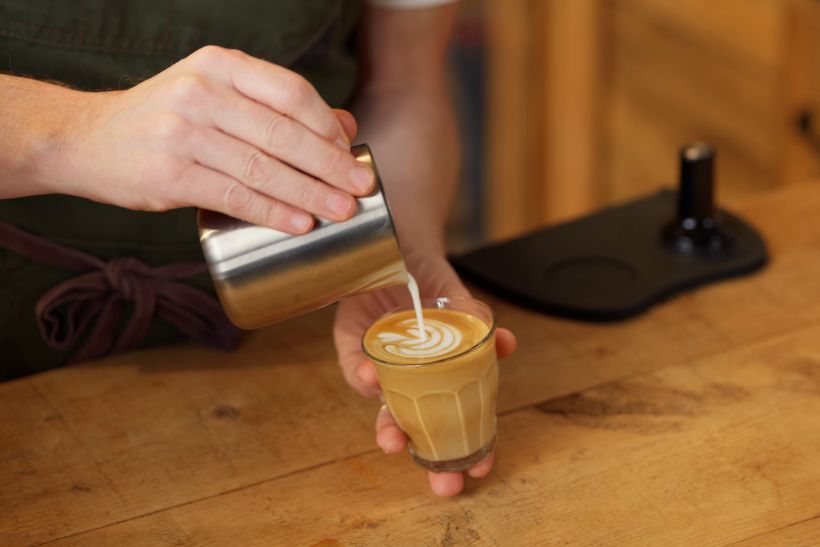
Steaming Milk
The Neo has a lever for hot water and steam, instead of the switch on the Barista Express & Barista Express Impress. I like it; it’s more ergonomic than the switch, and I think it looks slightly cooler too.
It’s a Pro steam wand with a single-hole tip, but the slightly chunkier version, relatively cool to the touch, and genuinely easy to wipe. You don’t have to be lightning quick about wiping it down before milk burns onto it; it just drips off, which I definately prefer to the wand on the original Barista Express and the Express Impress.
Steam heat-up time after engaging the lever is about 15 seconds, and 0–60°C for 170ml of milk takes about 57–58 seconds, just a few seconds quicker than the original, presumably mostly down to the different tip, since it’s the same thermocoil.
Hands-off steaming works particularly well on the Neo, too. This is also referred to as “Ghost steaming”, and it just means slapping the jug on the drip tray, putting the wand into the jug & finding the right position, then stopping it once it’s hot enough.
Hot Water
Push the lever the other way for hot water, dispensed via a separate spout. It takes about 45 seconds to dispense 200ml of hot water, so not too bad, and the final temperature comes out at around 76-77°C.
Milk Drink Workflow
I think most people considering this machine will be looking for something they can walk up to and make themselves a latte, cappuccino, or flat white, with as little fuss as possible.
There’s no real improvement over the original Barista Express when it comes to milk, other than a couple of seconds faster steaming time and a wand that’s easier to wipe clean. The espresso side of things is so much easier, though, which in turn makes it less of a faff to produce milk drinks on the Neo.
I think to really make a difference in milk drink workflow they would have needed to put a temp sensor in the steam tip, so you could set it to stop at whatever milk temp you prefer.
If they’d have given it the queuing system that the Touch Impress and the Oracle Touch have, too, meaning that the milk starts when the espresso stops (or vice versa) it would have been even better in this regard, as it would mean you can just go get ready, come back to the machine a minute or so later and add the milk to your espresso, job done.
I understand why they didn’t do this. They had to stop somewhere, or it would have ended up close to the price of the Touch Impress. I do hope we see a “Barista Express Neo Plus” in the future, though, with these features.
The NFC Setup Card
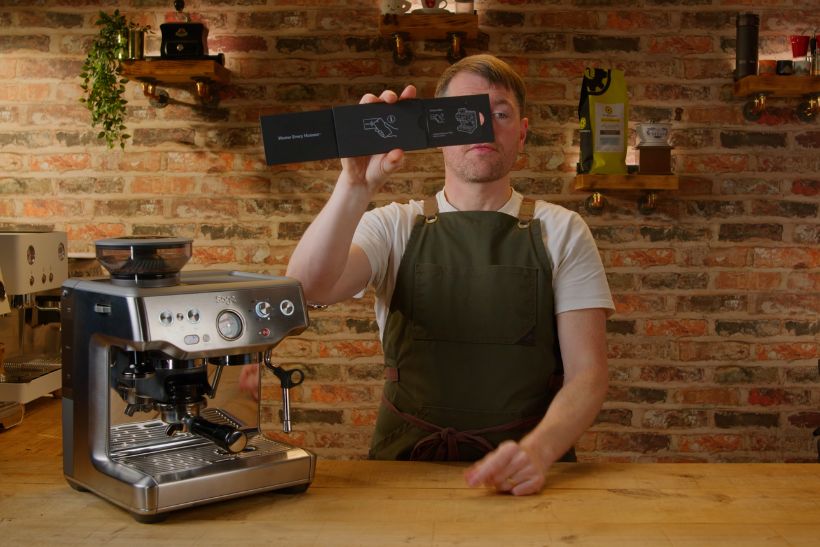
It comes in a neat little box with a slide-out NFC card; you tap your smartphone on it, and I think it takes you through an interactive setup guide on your device, while also letting you register your machine for your warranty.
I say “I think” because at the time of writing, the Neo hasn’t yet been released, and the NFC card is currently taking me to an empty page.
I Love The Barista Express Neo!
Honestly, I think they’ve nailed it.
The Smooth Shot feature is absolute genius, and it really works! The grind by weight is VERY good, very precise & really improves espresso-making workflow. The shot timer and the rest of the stuff the digital display brings, I think, are all brilliant, and I think it appeals to a LOT of people.
My Wish List
There are things that I would love to see on a future version of the Barista Express Neo.
I understand why they probably couldn’t make these things possible on the Neo, but in my opinion, if they kept everything else the same but produced a “Plus” version with the following, for maybe £100 or so more, it would be the ultimate machine for a LOT of people.
Bluetooth Scale Connectivity
The new Sage Precision Duo scales are designed to be paired with the Oracle Jet & Oracle Dual Boiler to provide the brew-by-weight feature. If they made them compatible with a version of the Barista Express Neo, teaming up Grind-by-weight with Brew-by-weight, that would be epic when it comes to espresso workflow!
Milk Temperature Sensor
If a “plus” version of the Barista Express Neo had grind-by-weight and brew-by-weight, plus a temperature sensor in the steam tip, it would be incredible for milk-drink workflow.
You wouldn’t even need the air pump that the Touch Impress has, as with the Meraki and Gemilai Ele, ghost steaming works absolutely fine. All you’d need to do is find the right position for the steam tip (easy once you’ve done it a few times), and just come back to your machine in a minute or so when it’s finished steaming.
If it had the aforementioned queuing system, that would mean you could just set the milk steaming, queueing the espresso to start after, and come back to the machine a minute or so later to finish your latte or cappuccino.
Brew Temperature Options
If they were making a new version, I’d love to see simply the brew temperature options as 1-5, or low to high. This isn’t a huge deal, but I think it would be a good move to reduce the confusion that I think the current temperature setting labels may cause.
Who Is This For?
I actually think this is probably for most people considering an integrated grinder espresso machine. In fact, in terms of what it does (great-quality barista-quality coffee at home with as little messing about as possible), this is probably what most people assume the Barista Express and other integrated grinder machines do.
Over the years, I’ve spoken to quite a number of people with the Barista Express and similar machines, who expected it to do way more in this regard (reducing faff) than it actually does.
In other words, the term “built-in grinder” or “bean-to-cup”, which is often used to promote machines like this, implies additional convenience but doesn’t really deliver it (other than saving a plug socket) and sometimes being slightly less messy.
The Barista Express Neo, on the other hand, thanks to the grind-by-weight and the Smooth Shot feature, really does make it easier to make great-tasting espresso-based coffees without the same level of faff that is often required.
I also think the Neo is for more serious home baristas who want a machine they can run in “geek mode” themselves, while everyone else in the house uses it in “easy mode,” and for anyone who wants convenience on weekdays and the ability to geek out when they have the time.
What Coffee Beans Is This For?
The temperature settings would seem to imply that you can use the Barista Express Neo with very light, light, and medium roasts. You could do that, but I think it would be a waste of great quality espresso beans.
The Neo is ace, it’s very clever, but what we can’t get away from is that it has relatively standard small conical burrs (the original “Full-Nice” burrs found in the Barista Express and Express Impress), along with a slipper clutch to keep the max torque low enough so as not to strip the nylon gears (the next failsafe after the clutch, to prevent motor damage).
To get the best from lighter roasts, especially higher-grown, high-quality lighter roasts which are often very dense, you really need a fairly serious grinder, many of which would cost similar to or maybe even more than the cost of the Barista Express Neo!
For me, the Neo, like most integrated grinder espresso machines, works best with relatively classic espresso-roast levels. I’m not referring to super-dark, oily beans you may think of as medium/dark if you usually buy your coffee from the supermarket; I’m talking about the kind of roast level you’ll get from my Cworks best sellers collection, for example.
Alternatives
At the time of filming, there’s no direct alternative in terms of an integrated grinder espresso machine with grind-by-weight, auto flow rate adjustment. Within about £100 of the Neo, though, there’s the Barista Express, the Barista Express Impress, the Barista Pro, the Ninja Luxe Café 601, 701 and Mini, and the Gemilai Ele One, which I’ll be reviewing soon.
Barista Express Neo Review: Verdict
If you’re looking for a machine capable of genuinely “cafe quality” espresso-based drinks, and you just want to walk up to it each morning and walk away with a coffee you’re happy with, with very little messing about dialling in, this is probably for you, especially if you’re looking for the more classic, crowd-pleasing espresso that you’ll get from medium/dark roasts.
I think the Smooth Shot feature is genius; the grind-by-weight is brilliant, as is the shot timer, the pre-infusion control and all in all, I think this is a master stroke from Sage.
As I’ve mentioned, I’d love to see a “Neo Plus” which will pair with Sage’s new bluetooth scales, and I’d love to see a version with a temperature sensor in the steam tip, and I very much hope we start to see other “Neo” machines from Sage/Breville in the not too distant future.
The post Sage Barista Express Neo Review: The Game-Changing Espresso Machine You Didn’t Expect appeared first on Coffee Blog.
By: KevTitle: Sage Barista Express Neo Review: The Game-Changing Espresso Machine You Didn’t Expect
Sourced From: coffeeblog.co.uk/sage-barista-express-neo-review/
Published Date: Sun, 15 Nov 2026 10:06:16 +0000