Coffee “intensity” or “strength” is often misunderstood. Let's say you like your coffee “strong”, what does that actually mean?
If you’ve recently switched from big-brand/supermarket beans (usually with no roasted-on date) to freshly roasted speciality coffee beans, and your first reaction was: “Hang on… this tastes a bit weak”, this post is for you.
What you're probably missing isn't “strength” in the way you think, but roastiness, that darker, toastier, more “developed” flavour that commercial coffee usually refers to as strength or intensity.

If this is your first time here, hello, I’m Kev (Coffee Kev). I run CoffeeBlog.co.uk, the Coffee Kev YouTube channel, and CoffeeKev.com for my coffee-loving cousins in the U.S. I’m also Founder & Director of Coffee at Cworks.co.uk, where we sell affordable, very freshly roasted, MEGA-tasting coffee.
In this post (and the video below), I’ll explain what “strength” or “intensity” usually means on supermarket coffee, why fresh beans can taste “weaker” at first, and the simplest way to choose fresh beans which you perceive as “strong”, without losing all the interesting flavour you’ve just upgraded into.
Quick Navigation
- Coffee Intensity vs Coffee Strength (The Confusing Bit)
- What “Intensity” Usually Means (on Supermarket Beans)
- The Toaster Analogy (and Why It Actually Helps)
- Why Freshly Roasted Coffee Can Taste “Weak”
- The Simple Solution (Ease Your Way In)
- A Few Bean Suggestions (If You Want a Shortcut)
- Brucey Bonus #1: Let Your Coffee Cool Down
- Brucey Bonus #2: Rest Your Beans
- Brucey Bonus #3: Translating Roast Levels
- Brucey Bonus #4: Buy Coffee by the Kilo
- Conclusion
Coffee Intensity or Strength (The Confusing Bit)
Let’s start with the main reason people get confused:
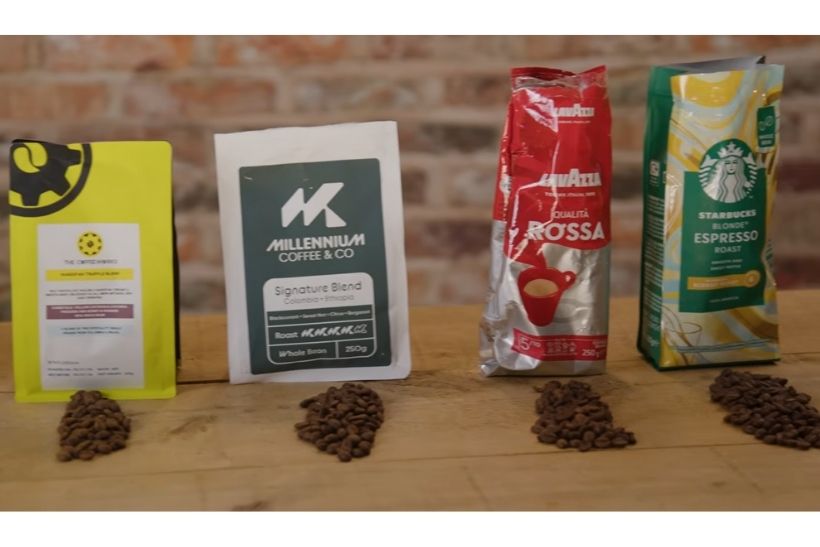
“Intensity” or “Strength” on a bag of supermarket coffee usually means how dark the roast is, or more accurately, how developed the roast is. When you see an intensity scale (often a number on a scale of 1-10), the higher the number the darker (more developed) the roast.
Commercial coffee tends to fall within a fairly narrow range of roast levels, usually dark to darker, mainly because it’s easier to produce consistently at scale and aligns with long shelf life and “works in most machines”.
So it may be referred to as light, medium & dark, or in a big range of numbers, but the starting point is already what most small batch roasters would think of as fairly dark.
Which means… when people say “this coffee is stronger” in that world, what they mean is:
It tastes more roasty. Meaning that it has been “developed” or “cooked” more.
That’s not a judgement, by the way. Lots of people love that taste profile. But it’s important to know what you’re actually tasting.
What “Intensity” Usually Means on Supermarket Beans
If your usual beans are a big brand or supermarket own-brand, and there’s no roast-on date, the intensity number on the front is essentially a roast-level dial.
So the higher the number, the darker the roast and therefore the stronger roasty note.
So if you drink this coffee and think you like “strong”- tasting coffee, what you actually like is a stronger roasty note.
And that’s why people often switch to fresh coffee and go: “Where’s the strength gone?”, simply because there's a tendency to start around the “medium” roast level when switching over, which usually means something quite different for freshly roasted coffee beans.
Freshly roasted speciality coffee is completely different, the roaster is usually trying to highlight the special flavour notes each bean or blend has to offer, such as:
- Complexity
- Sweetness
- Chocolate notes
- Fruit notes
- Caramel notes
- Acidity (the nice kind, not the “battery acid” kind)
…and you don't tend to get the familiar “roasty” notes that you may associate with strength, until you choose the more developed roast level most roasters refer to as dark.
The Toaster Analogy
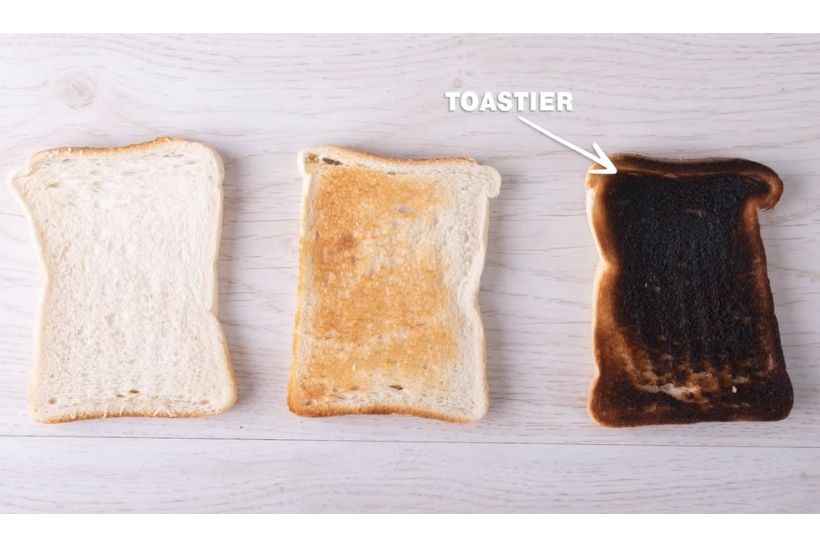
Think of the intensity ratings on supermarket coffee like the numbers on your toaster.
You wouldn’t expect turning a toaster from 3 to 5 to make your toast taste stronger of bread. You’d expect it to taste more toasty, because you’ve increased the intensity of the Maillard reaction, the cooking.
So darker toast tastes… toastier.
Same thing with coffee roast development. Darker roasts taste more roasty, and for many mainstream coffees, that roasty note is what people interpret as “strength”.
Another analogy: steak.
If you order it well done, you’re not expecting it to taste more beefy than medium-well. You’re expecting it to taste more… cooked. In the commercial coffee world, roast level and strength/intensity are used interchangeably.
Why Freshly Roasted Coffee Can Taste “Weak”

If you buy coffee from a roaster (or a coffee shop that stocks beans from a roaster), you might notice something feels “missing, and what you think is missing is strength. But what’s usually missing is that roastier flavour note you’re used to from darker commercial coffee.
So you’re not imagining it; you’ve simply changed the flavour profiles.

The Simple Solution: Ease Your Way In
The fix is mega simple:
Start closer to what you know.
If you’re used to darker supermarket beans, don’t jump straight into a medium roast single origin and expect it to taste familiar. Aim towards dark roasts from a roaster first, rather than medium.
If you drink espresso, I'd also recommend starting with blends; they're generally more forgiving and are more likely to deliver more familiar taste notes.
“Medium” from a roaster usually means something quite different.
The reason many people get caught out here is that they think of the beans they're currently using as medium roast, so this is where they naturally go when buying from a roaster.
Roasters have a different language to commercial brands when it comes to roast level. A medium, or intensity level 5/10 for example, from a supermarket, would be considered medium/dark or dark to a roaster.
So if you enjoy the roasty note you currently think of as strength or intensity, you'd be better off starting at the medium dark to dark roast level from roasters.
This doesn't mean freshly roasted dark roast will taste exactly like what you’re used to, by the way. What you should notice is the satisfying roasty hit plus extra complexity you’ve probably never tasted in coffee before.
A Few Bean Suggestions (If You Want a Shortcut)
Using my own beans from Cworks as an example (because I know them inside out, and because plugging them here and on the Coffee Kev YouTube channel means we don't have to pay for pricey marketing and allows us to keep our prices keen), a good place to start if you want that satisfying roasty note would be:
- Choc & Nut Colombia (dark roast)
- Dark Chocolate & Biscoff Mokka Djimma (dark roast)
- Chocolate Fondant Blend (medium/dark — still gives enough roastiness to feel “strong”)
They’ll feel closer to what you know, but with a more interesting flavour going on in the background.
Watch the Video: Coffee Intensity vs Coffee Strength
If you’d rather watch than read, here’s the YouTube video this article is based on:
Brucey Bonus #1: Let Your Coffee Cool Down
This one sounds almost too simple, but it makes a big difference: Tastebuds don’t work nearly as well when what they’re trying to taste is very hot. Try letting your coffee cool to around 60°C or below, then taste it again.
You’ll often find the flavours suddenly open up and become much more obvious.
Brucey Bonus #2: Rest Your Beans
Freshly roasted beans usually aren’t at their best straight away. They’re still in the more volatile stages of degassing (releasing CO2). For most coffees, peak usability starts somewhere around 7 to 10 days after roast. Some people rest beans longer; I know people who swear by 2–3 weeks because they get more consistent results.
At Cworks, our beans are roasted daily, so when you receive them, they’re usually only a few days off roast. In general, it’s a good idea to buy coffee a bit before you run out, so by the time you open the bag, it’s had at least a week to degas.
And by the way: whole coffee beans last longer than a lot of people think. Freshly roasted simply means the coffee has a roasted-on date. Once beans have had the initial 7–10 days of degassing and are stored properly, they’ll usually be fine for 4–6 weeks.
Even after that, they don’t suddenly taste of nothing. They just slowly lose vibrancy over time.
Brucey Bonus #3: Translating Roast Levels
When you start buying fresh beans, you’ll usually see roast levels described by colour rather than number:
- Light/light-medium
- Medium
- Medium-dark
- Dark
Some supermarket beans use this terminology too, or the numbers imply a similar meaning, but it’s generally much darker. Commercially roasted beans without a roasted-on date typically start at medium-dark.
So if you buy a “medium” roast from a roaster, it’s likely to be much lighter than a “medium” (or intensity level 3/10) from a big commercial brand.
Also worth noting: roasters typically describe the development level, and this doesn’t look identical across all coffees. So don’t expect all beans at the same roast level to be the exact same colour, even from the same roaster.
Brucey Bonus #4: Buy Your Coffee by the Kilo
You might have noticed that buying by the kilo is usually the most cost-effective, but it can be confusing because a kilo often doesn’t cost the same as 4 × 250g.
The reason is simple:
- Four 250g bags = four times the packaging
- Filling & labelling a 250g bag takes about the same time as a 1kg bag
- So it’s roughly four times the labour to sell a kilo via four bags
That’s why you’ll usually see a discount when buying by the kilo.
So there you go. Now you know.
Conclusion
If your fresh coffee tastes “weak” after switching from supermarket beans, it’s usually not because it lacks strength; it’s because it lacks the roast-driven intensity your taste memory associates with “strong coffee”.
Start with a dark roast from a roaster, let your coffee cool a bit before tasting, rest your beans properly, and give your palate time to adjust. And once it does… you’ll often find you can still get that satisfying roasty hit, plus a load of extra flavour you didn’t even know coffee could have.
The post Coffee Intensity vs Strength Explained: Taste, Caffeine & Flavour appeared first on Coffee Blog.
By: kevTitle: Coffee Intensity vs Strength Explained: Taste, Caffeine & Flavour
Sourced From: coffeeblog.co.uk/coffee-intensity-vs-strength/
Published Date: Sun, 22 Feb 2026 17:10:48 +0000